Walk into any lumberyard or big-box store this year, and you’ll spot it—plywood prices are unpredictable. Whether you’re building a backyard bench, redoing garage walls, or planning a home office desk, the final cost hinges on the sheet’s size, material, and availability.
In this article, I’ll break down what I’ve learned from shopping for plywood over the past year, with pricing estimates, product comparisons, and buying strategies I’ve used myself.
🪵 Why Some Plywood Sheets Cost More Than Others
You might wonder why two sheets of plywood, the same size and thickness, can have a $30 price difference. From my experience, it often comes down to three factors: veneer quality, glue type, and manufacturing process.
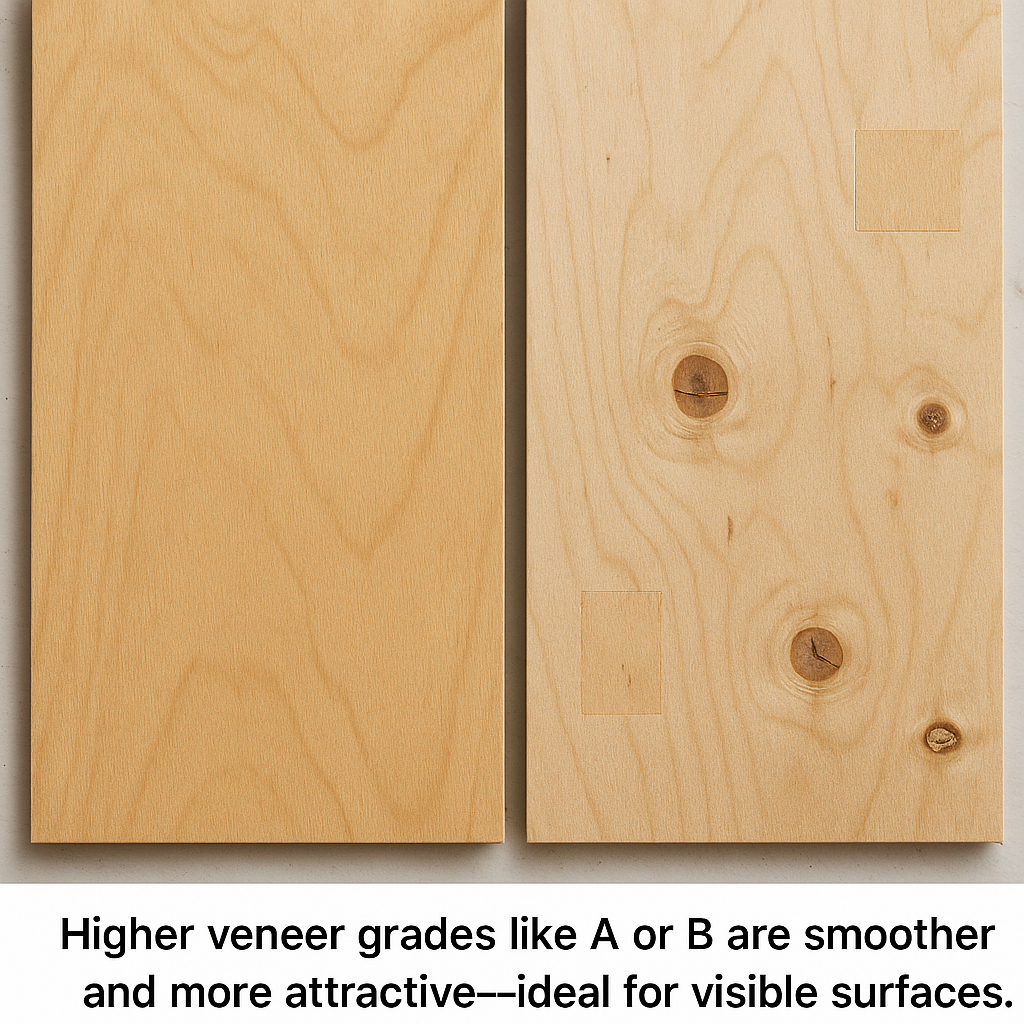
1. Veneer Grade and Appearance Higher-grade plywood, like A or B face veneers, is sanded smooth, free from knots, and made to be seen. These are typically used for cabinets, furniture, or painted surfaces. Lower-grade options like C or D faces are rougher and may have visible plugs, knots, or patches. These are great when the sheet will be hidden or covered later, like in subfloors or wall sheathing.
In one project, I picked up a B-grade hardwood plywood for a dresser drawer build. It was $20 more per sheet than the D-grade panels sitting nearby, but the surface was flawless. I didn’t need to do any patching or extra sanding, which saved time and gave me a professional look right out of the gate.
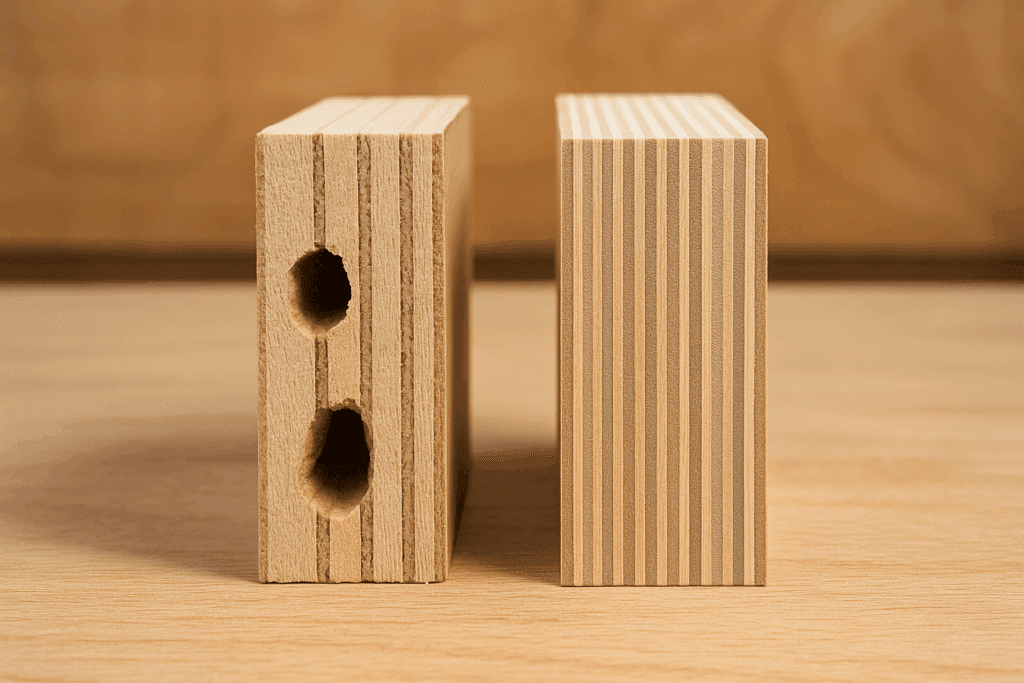
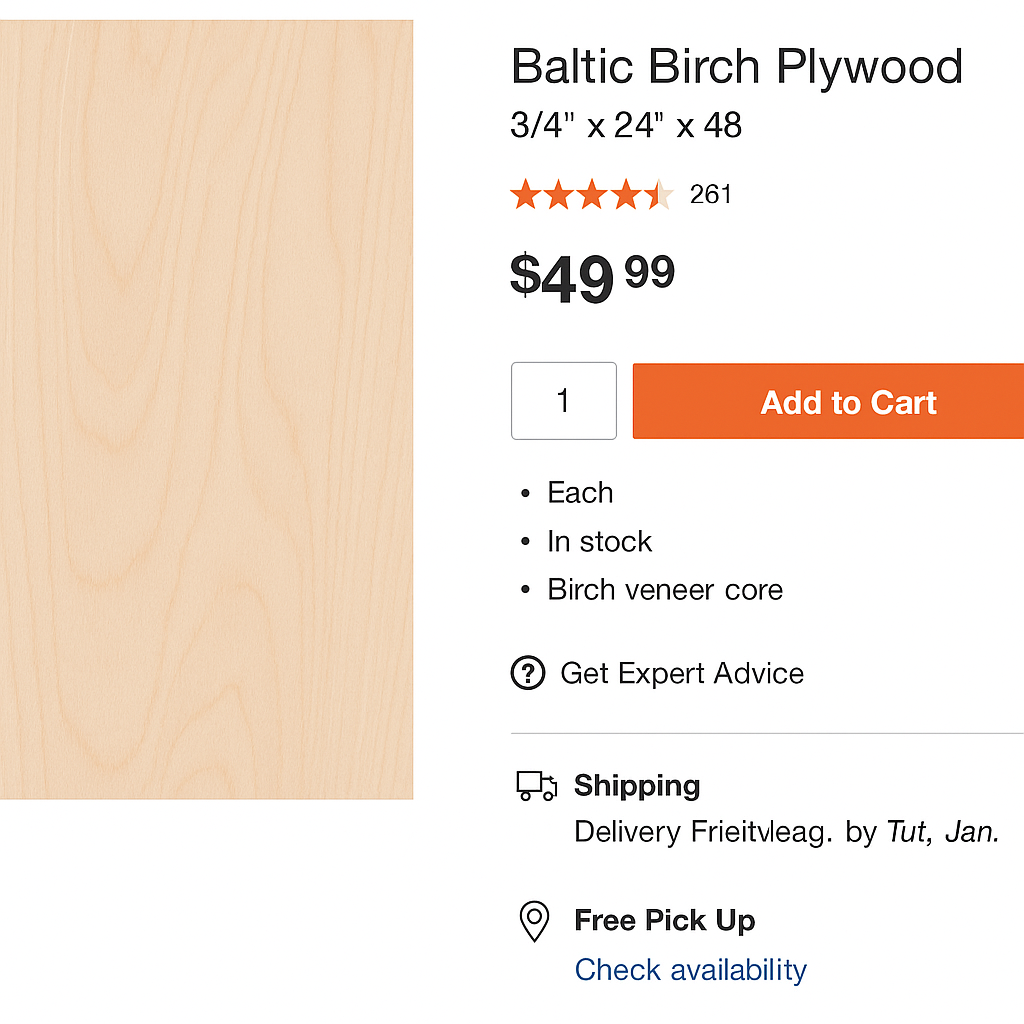
2. Core Construction Not all plywood cores are the same. Some cheaper panels are made with fewer plies or contain voids in the core layers. Higher-end sheets—like Baltic Birch—have more plies, consistent core veneers, and almost no gaps. That makes them more stable, easier to machine, and better at holding fasteners.
If I’m routing edge profiles or cutting fine joinery, I’ll spend the extra money on a panel with a solid core. For a garage shelf or wall panel, I don’t need that perfection—I go cheaper.
3. Adhesives and Formaldehyde-Free Options Green-certified or formaldehyde-free plywood often costs a bit more, but for indoor builds, I think it’s worth it. Some of the cheaper imports I’ve seen at big box stores give off a strong smell when cut, likely due to urea-formaldehyde glues. For my kids’ room or anything inside the house, I now choose CARB-compliant or low-VOC panels.
The peace of mind, plus cleaner air indoors, makes it an easy upgrade in my book.
4. Country of Origin Domestic plywood often costs more but tends to be more consistent in thickness, finish, and edge durability. Imported sheets may be cheaper, but sometimes suffer from warping or uneven lamination. I’ve found that U.S.-made panels often hold up better under repeated stress, like in shop jigs or mobile carts.
Bottom line? That extra $10–$20 per panel can be a smart investment if your project demands precision, a smooth finish, or moisture resistance. For utility builds or temporary fixtures, you can go cheaper and still get the job done.
🔍 Where to Buy Plywood: Comparing Stores, Local Yards, and Online
Not all plywood sellers are created equal, and knowing where to shop can make a real difference in your total project cost. I’ve bought plywood from all sorts of places over the years, and here’s how they compare.
If I need just one or two panels and don’t mind paying a little more for convenience, I’ll check the big-box stores. They’re usually reliable for construction-grade and sanded panels, but rarely stock furniture-grade or marine-grade plywood.
2. Local Lumber Yards This is where I’ve had the best luck finding high-quality sheets at fair prices. Smaller yards often:
Offer contractor discounts
Have knowledgeable staff who know their inventory
Carry better hardwood or specialty panels
I once walked into a yard asking for ACX, and the clerk offered to price-match a competitor plus cut it to size for free. That kind of service isn’t common at chains.
Pro tip: Call ahead and ask if they offer discounts on bundles or odd-lot sheets. These aren’t always advertised.
3. Wholesale Plywood Distributors If you’re building cabinets or furniture at scale, consider setting up an account with a plywood distributor. These companies often carry:
Full lines of hardwood plywood (birch, maple, walnut, etc.)
Veneered panels and formaldehyde-free cores
Custom-cut services and better pricing on pallets
They may have minimum order requirements, but if you’re planning multiple projects, it can cut your material cost by 20–30%.
4. Online Retailers and Marketplaces
Websites like Woodcraft, Rockler, or even Amazon sell pre-cut panels, though they’re usually marked up. For specialty plywood like Baltic birch or pre-finished panels, online can be a great backup source—especially if you live far from major suppliers.
I usually avoid ordering full 4×8 sheets online due to shipping costs, but for small panel packs, it’s hard to beat the convenience.
Join local woodworking groups or forums. People often share where the best local deals are or trade sheets leftover from their own builds. I’ve even scored some free plywood this way!
Walk into any lumberyard or big-box store this year, and you’ll spot it—plywood prices are unpredictable. Whether you’re building a backyard bench, redoing garage walls, or planning a home office desk, the final cost hinges on the sheet’s size, material, and availability.
In this article, I’ll break down what I’ve learned from shopping for plywood over the past year, with pricing estimates, product comparisons, and buying strategies I’ve used myself.
🔧 What’s Driving Plywood Prices in 2025?
Plywood is made by gluing together multiple layers of veneer with the grain alternating direction on each layer. It’s this cross-laminated construction that gives it strength and resistance to warping.
Here’s what I’ve personally noticed contributing to the current prices:
Shipping delays from mills
Builder demand during peak season
Regional lumber shortages
Inflation-driven increases in manufacturing costs
Some weeks I’d find 3/4″ ACX for $70, and other weeks it jumped to $90. I’ve learned to call ahead and ask about bulk or contractor pricing, especially if I’m buying more than five sheets.
📊 Plywood Price Estimates by Type and Thickness
If you’re trying to budget your build, here’s a general price range I’ve seen at local suppliers and major retailers in 2025:
Plywood Type
Thickness
Estimated Price (Per Sheet)
ACX Plywood
1/4″
$30 – $40
ACX Plywood
1/2″
$45 – $60
ACX Plywood
3/4″
$65 – $85
CDX Plywood
1/4″
$20 – $30
CDX Plywood
1/2″
$35 – $50
CDX Plywood
3/4″
$55 – $70
OSB
1/2″
$25 – $40
OSB
3/4″
$40 – $55
Marine Plywood
1/2″
$80 – $110
Marine Plywood
3/4″
$120 – $160
Baltic Birch
1/2″
$50 – $70
Baltic Birch
3/4″
$80 – $100
💡 If you’re not building a deck or structural floor, going with 1/2″ instead of 3/4″ can shave 25% off the material cost.
📉 Plywood Thickness: Where to Save
One of my recent builds was a homework workbench. I used 3/4″ plywood for the top and 1/2″ for the shelf underneath. Both were from the same panel type, and the cost difference was noticeable, especially since I needed multiple sheets.
I often go thinner in places where appearance matters less or the load is light. Sometimes I even stack and glue two thinner panels instead of buying the thicker one—it can be cheaper and just as strong.
🧰 Choosing Plywood: Matching Panel to Project
Not all plywood is created equal. Here’s how I decide which kind to use, depending on what I’m building:
🪚 What Each Type Is Good For
Hardwood Plywood
Use It For: Dressers, shelving, cabinet doors
Why: Smooth, attractive grain; great for staining or clear finishes
Why: It’s cheaper, easier to find in bulk, and does the job when hidden
OSB (Oriented Strand Board)
Use It For: Sheathing, underlayment, shop jigs
Why: Affordable and durable, especially when it won’t be seen
Marine Plywood
Use It For: Outdoor builds, boats, moisture-prone areas
Why: Toughest option against water damage
💸 My Top Money-Saving Tricks for Plywood
Call Around First – I once saved $120 on 10 sheets just by phoning three local yards.
Buy Off-Cuts – Ask if they have pre-cut, damaged, or odd-sized sheets.
Think Ahead – Plan your cuts to minimize waste and avoid buying an extra sheet.
Use What You Have – I’ve reused the backs of old furniture or leftover shop scraps for plenty of small projects.
Seasonal Buying – Winter tends to be quieter, and some yards are willing to negotiate or offer bulk deals.
🌱 Greener Panel Choices That Perform
If you care about indoor air quality or responsible forest use (and honestly, you should), look for these labels:
FSC Certification
CARB-compliant or formaldehyde-free
Low-VOC glues
I started switching to low-emission panels when I began building indoor furniture for my kids’ rooms. The finish looked just as good, and the air quality benefit is real.
Why I Still Choose Plywood in 2025
There’s a kind of confidence that comes with using plywood. Once you know how it behaves—how it cuts, how it reacts to glue and screws—you don’t second guess your builds. Over time, I’ve learned what each grade and thickness can handle, and I’ve come to trust it like a reliable shop tool. It’s not flashy, but it works.
I’ve used plywood for jigs, workbenches, drawer boxes, tabletops, and even as backing for wall art. Some of my best budget builds started with a stack of imperfect, discounted plywood sheets. Give it a little attention with a sander and a good finish, and you’d be surprised how polished it can look.
I’ve also started experimenting more with combining plywood with solid wood for trim and face frames. This approach gives me the strength and affordability of ply but with the warmth of solid lumber where it counts. It’s a great way to elevate the final look without adding too much to the cost or complexity.
Plywood might not be cheap, but it’s still my go-to for nearly everything in the shop. It cuts clean, holds fasteners well, and stays stable over time. The finish may need some sanding or edge treatment, but the result is strong and predictable.
No matter the project, there’s usually a type of plywood that fits the bill—and the budget.
Cedar Plywood: A Complete DIY & Builder’s Guide by Admin September 8, 2025 Softwood If you’ve ever stepped into a cedar-lined closet or opened an old cedar chest, you know the scent. That fresh, woodsy smell isn’t just nostalgic—it’s…