So this all started because of a blue jay. My cat was losing her mind over it — doing that weird teeth-chatter thing and smacking the window like she had a shot at catching it. She didn’t. I was making coffee, watching her, thinking, “Yeah, you’d make it maybe five minutes out there before something went wrong.”
We’ve got a busy street on one side, an alley on the other, and more stray dogs than I can keep track of. Not to mention the time I saw a possum just… hanging out in the neighbor’s garage like it paid rent. So letting her roam wasn’t happening.
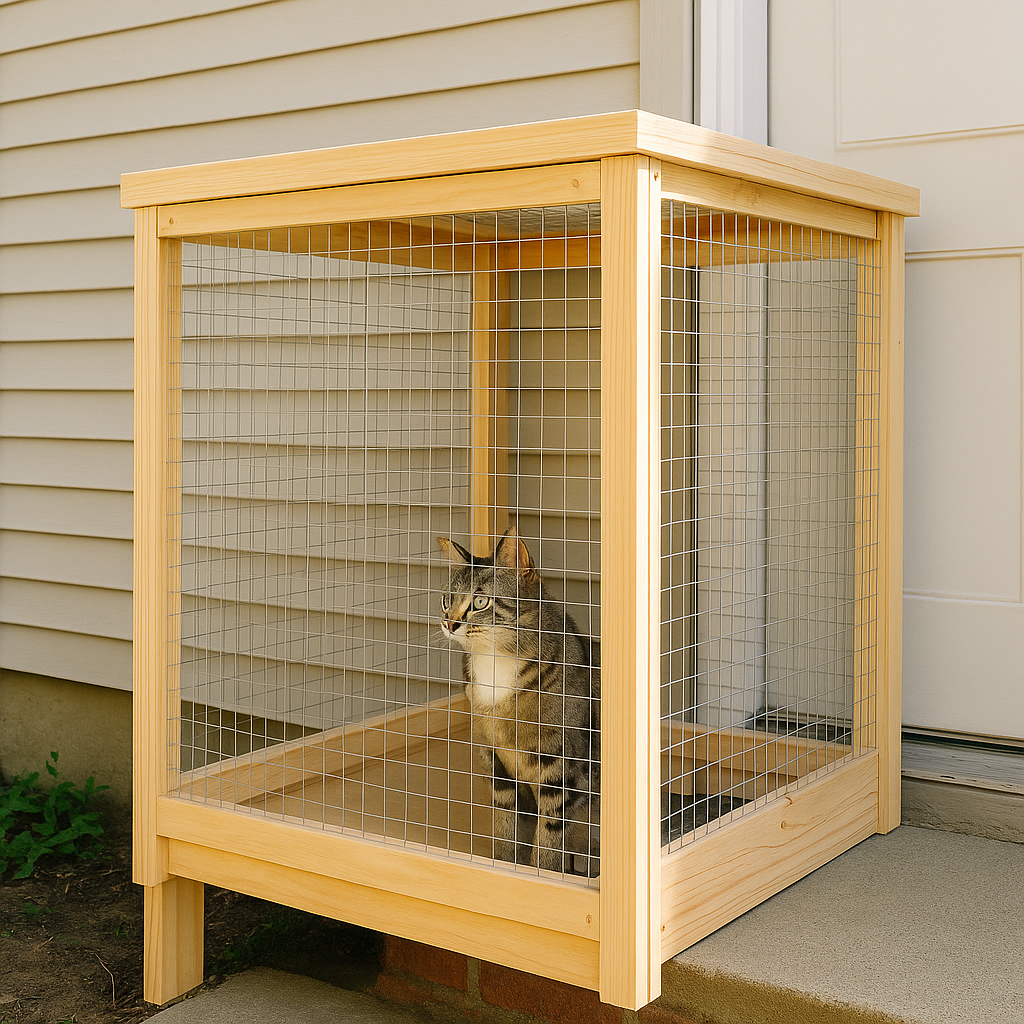
I sort of cobbled together this little wire-and-wood box off the side porch — nothing fancy, just enough room for her to sit and sniff the breeze. Back then, I didn’t even know it had a name. Turns out, people build these on purpose and call them catios.
Now I’ve seen all kinds — tiny ones that hang outside a window, tunnels that run across a yard, even these ridiculous multi-level setups with ramps and hammocks. And yeah, I’ve got a few ideas of my own now.
Why a Catio Is Worth Building
The idea for mine didn’t start as some Pinterest project. It started because my cat would sit by the sliding door every single afternoon, meowing at nothing — or at least nothing I could see. Then I realized she was tracking this one cardinal that likes to hang out in our maple tree. She’d chirp, twitch her tail, and then look at me like, “Well? Let me out.”
The thing is, our yard isn’t exactly safe. There’s a busy road on one side, a neighbor’s dog that doesn’t like cats, and last fall, I saw a raccoon the size of a small dog waddling across the fence. So, yeah… no free roaming.
Building the catio was my compromise. She gets fresh air, sunlight, and a better view of her bird friend. I get to stop worrying she’ll end up in someone’s garage or worse. It’s helped with her energy too — she zooms around the ramps and shelves I slapped together from leftover wood. And weirdly enough, people always comment on it. One friend even asked if I’d build them one. Guess I’m in the catio business now.
Before diving into design inspiration, let’s talk benefits:
Keeps your cat safe from cars, predators, and diseases.
Protects wildlife, especially birds, from predatory instincts.
Provides enrichment, reducing boredom and destructive indoor behavior.
Give your cat exercise with room to climb, jump, and explore.
Adds property value with an attractive, pet-friendly feature.
🔗 Related Reading: If you love pet-friendly projects, check out our DIY outdoor builds for more backyard upgrades.
Catio Ideas for Every Space
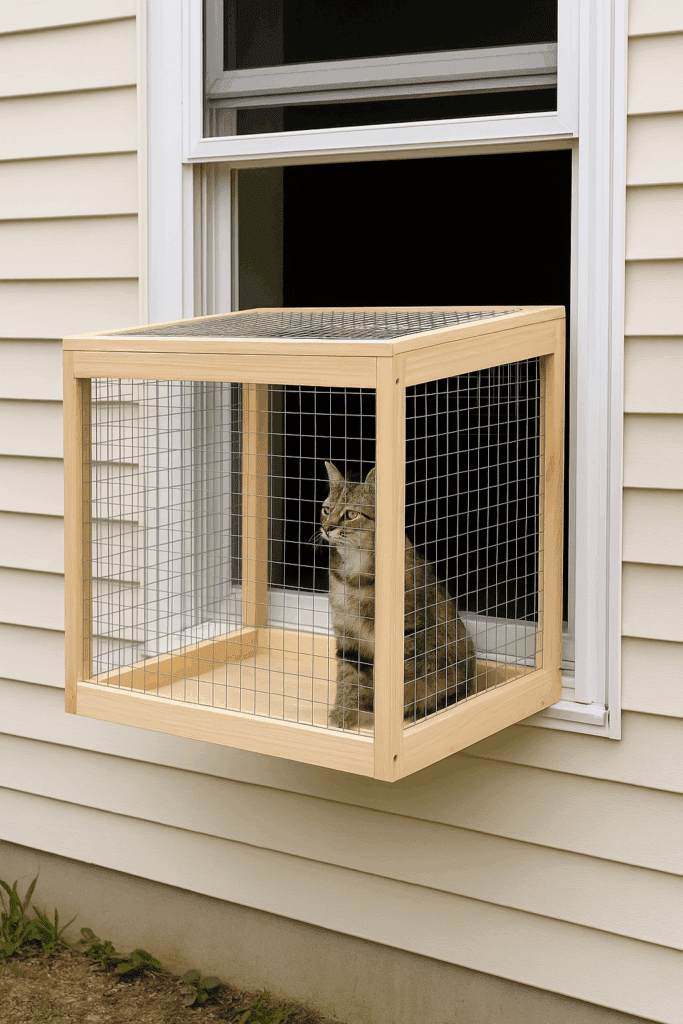
1. Window-Mounted Catios
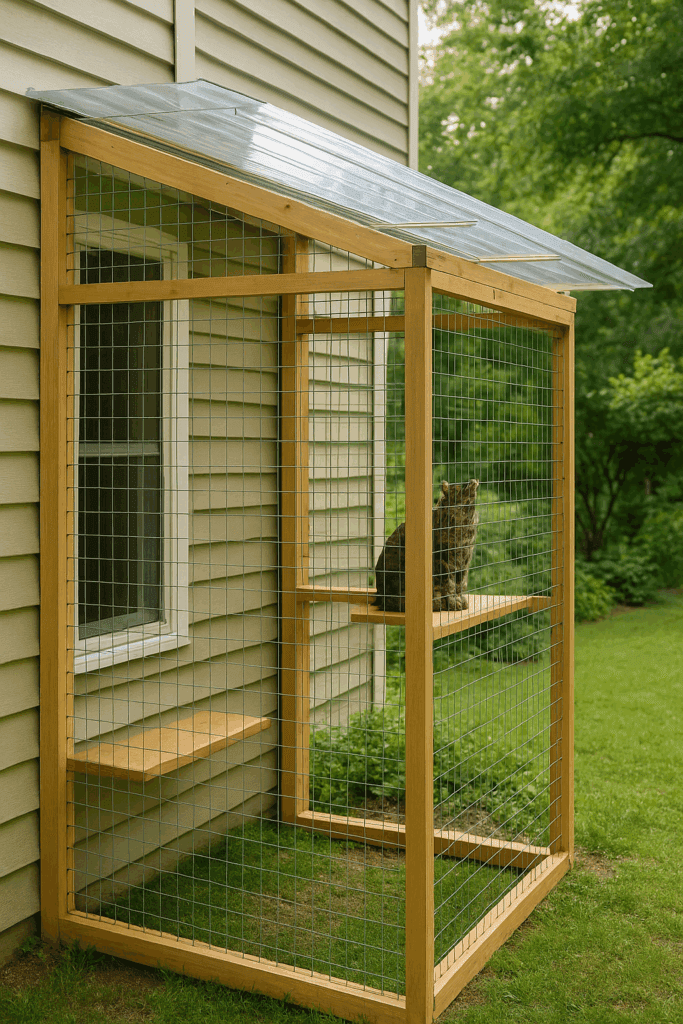
Didn’t know what a “window catio” was. Still not sure it needs a name. My cat was obsessed with this one window in the bedroom — same spot every day. Not much to look at out there, just an ugly fence and a patch of dirt.
One afternoon, I got restless. Started poking through the closet, found some bent wood, a strip of wire mesh, handful of screws rolling around in a cereal box. Thought, eh, maybe I can make something. I didn’t measure a thing. Just screwed pieces together until it looked like it might hold a cat.
It tilts a little. One side squeaks if you touch it. But the second I cracked the window, she hopped in. Sniffed the air like it was brand new, watched a pigeon land on the fence. Stayed there until dark. I guess you can buy a nice one if you want it to match your house. The store ones don’t squeak. Mine works fine.
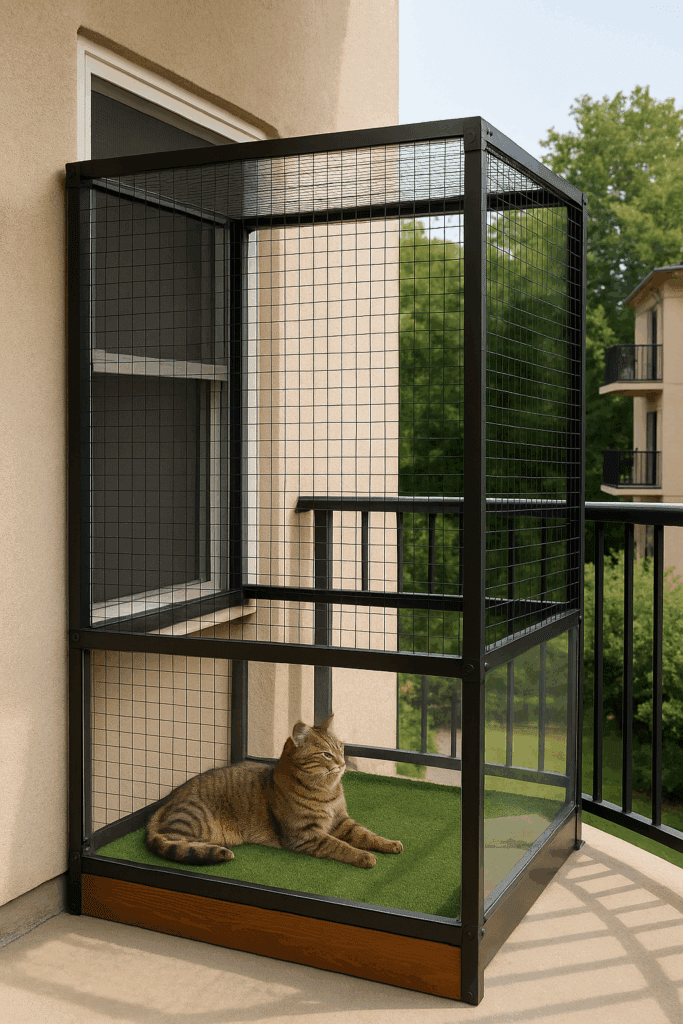
Back when I was in that condo, fourth floor, my cat thought sticking her head through the railing was the best idea she’d ever had. I didn’t think so. Every time she did it, I imagined her wriggling through and… yeah, nope.
One weekend, I grabbed some heavy mesh, zip ties, and a sheet of clear acrylic I found at the hardware store. Wrapped the mesh around the railing, screwed the acrylic to the bottom half. Looked a little patched together, but it worked. She tried pushing on it, even gave me the “I can still get out” stare, but then she settled in to watch the pigeons.
I slapped a piece of fake turf on the floor so she had something soft to sprawl on instead of the rough concrete. Thought about adding shelves, but honestly, she seemed happy just lying there, flicking her tail at everything that moved.
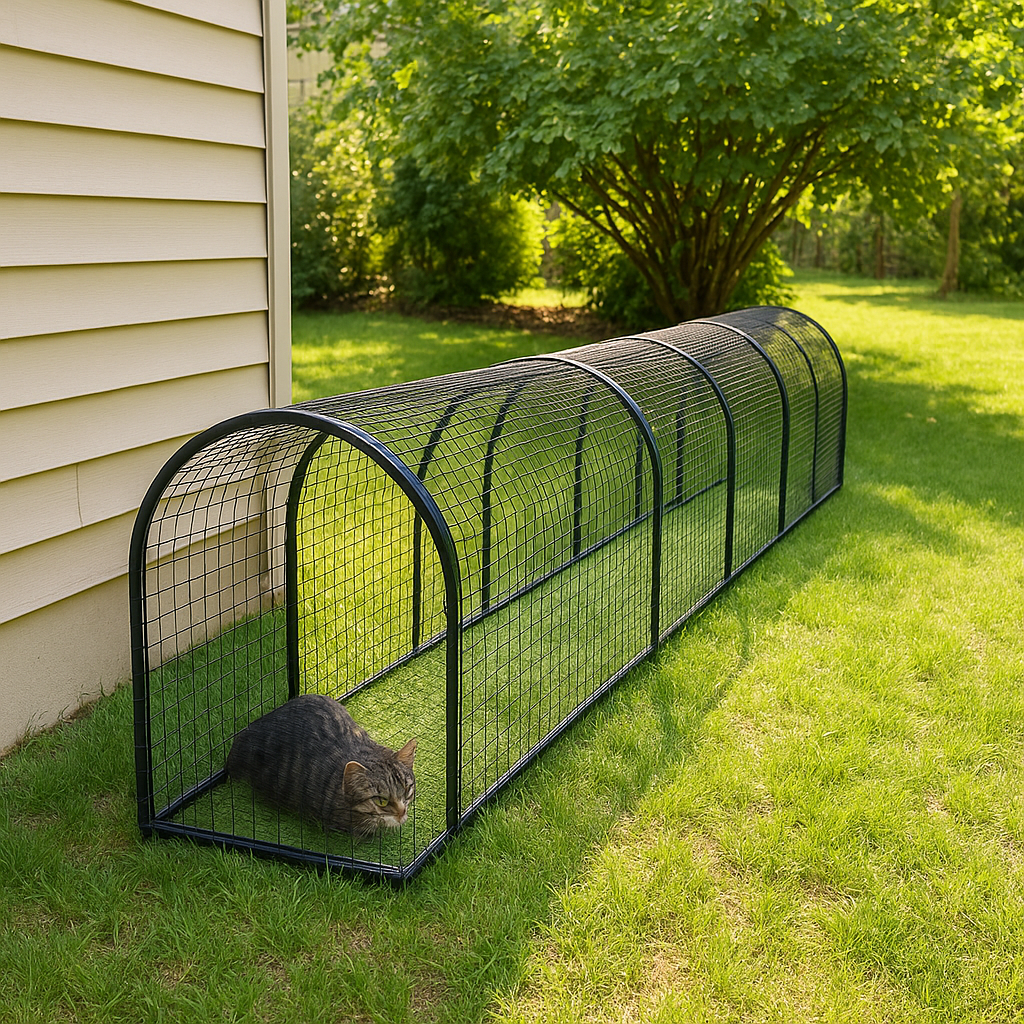
3. Tunnel Catios
One summer afternoon, I watched my neighbor’s tabby trot through what looked like a miniature hamster tube stretching across her lawn. It turned out to be a cat tunnel — mesh sides, a gentle curve in the middle, and just enough room for a cat to turn around. Her cat made it about halfway before stopping to stare at a grasshopper, tail swishing like a metronome.
I decided to try one for my cat, Millie. At first, I rigged up a couple of old play tunnels and anchored them with flowerpots (don’t recommend — the wind had its ideas). After upgrading to a sturdier, weatherproof tunnel, I connected it from her cat door to a shaded spot under the lilac bush. Now she trots out every morning, pauses halfway for a good sniff of the breeze, then claims her perch like it’s her watchtower.
If you want a ready-made option, the Kittywalk Outdoor Cat Tunnel is worth a look. It folds up when you don’t need it, snaps together when you do, and the mesh is tough enough to handle curious claws. Just stake it down tight — trust me, a determined squirrel can test your engineering.
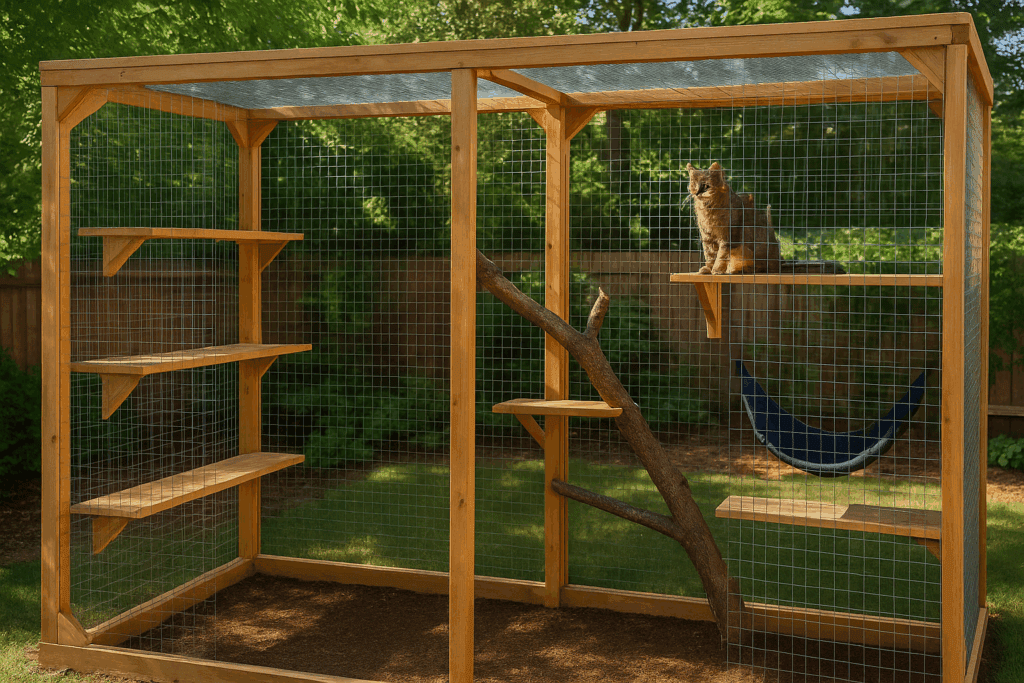
If you’ve got a yard corner that’s just collecting weeds, you’re sitting on potential gold for your cat. I helped a neighbor put one together last spring — it started with a basic frame, but before we knew it, we were hauling in branches for climbing, hanging two hammocks, and even tossing in a box full of old sweaters. I swear the cats thought we’d opened a feline resort.
We used heavy galvanized wire mesh. It’s not glamorous, but it’s tough enough to keep out raccoons and withstand a couple of hard storms. The first week, the cats hardly came inside. I’d find them at midnight perched on the upper shelves, watching moths buzz the light.
It’s not far off from building a mini shed. The same framing tricks work here, just with more perches and less storage space. If you can, add a tunnel from the house — it saves you the late-night chase when they decide the party isn’t over yet.
🔗 Related Reading:How to Build a DIY Shed — Similar framing principles apply for larger catio builds.
5. Porch or Patio Enclosures
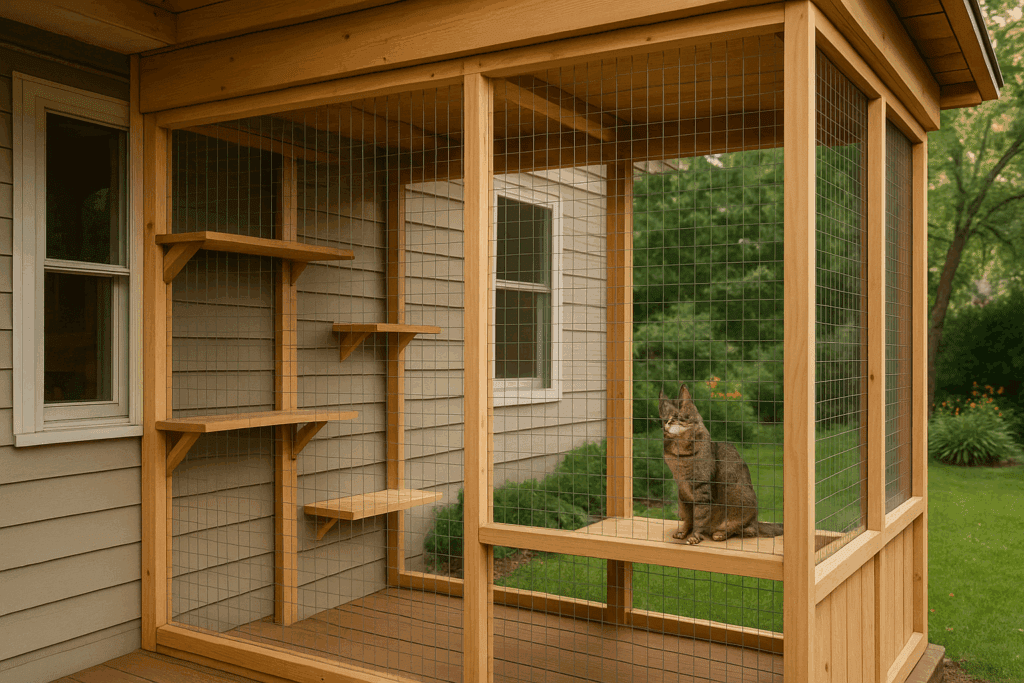
This is what I’ve got at my place. My porch used to be a hot, buggy mess in summer. I finally got tired of swatting mosquitoes and put up framed mesh panels. Best decision I’ve made for both me and the cats.
At first, they weren’t sure about it — lots of cautious sniffing. But once I screwed a shelf along the railing, it was game over. They’re out there every morning now, supervising the street while I drink my coffee.
I kept the build simple: pressure-treated wood for the base, pine for the uprights, and a staple gun that I probably overused. I messed up a measurement on one panel (still kicking myself) and had to redo it, but it’s solid now. For households with more than one cat, these enclosures cut down on turf wars. Everyone’s got room to stretch, sniff the breeze, and keep tabs on the neighborhood squirrels.
Shelves and Climbing Structures
If you’ve ever watched a cat in the wild (or even in your living room), you know they’re happiest when they can survey the world from above. Inside a catio, that means shelves, ramps, and ladders — not just one or two, but a mix of heights so they can leap, lounge, or stalk invisible prey. I built mine with leftover cedar boards, sanding the edges so no paws would get nicked. One cat in my crew insists on sprinting up the ladder every morning just to watch the sunrise.
Weather Protection
A good catio keeps cats dry and shaded without making it feel like a dark box. I’ve seen people repurpose corrugated plastic roofing or old patio awnings. My neighbor went the extra mile and installed a clear polycarbonate roof so her cats could sunbathe in winter but stay dry in the rain.
Flooring
Artificial turf feels like grass but won’t turn into mud.
Outdoor rugs add comfort and a splash of color.
Vinyl is a dream to clean if you’re aiming for low-maintenance.
Furniture and Enrichment
Hang a hammock in the corner, add a scratching post, toss in a hideaway box, and sprinkle puzzle feeders or dangling toys. Variety keeps them curious and active.
💡 Product Pick:K&H Outdoor Cat Bed — Raised for airflow, comfortable enough for hours of lazy afternoon naps.
DIY vs Pre-Built Catio Ideas
The first time I tried building a catio, I was feeling overly confident. No plan, no kit—just me, a pile of lumber, and the belief that “how hard can it be?” Answer: harder than I thought. I measured twice… okay, once, and cut once, twice, sometimes three times. By sunset, the thing wobbled like a newborn giraffe.
My cat, meanwhile, stayed inside. She just sat at the window, tail twitching, giving me that slow-blink look that felt more like mockery than love. The next day, after enough screws and re-doing the door twice, it finally stood on its own. She stepped out, sniffed the air, and immediately claimed the hammock. Victory.
Fast-forward to last summer—I bought a pre-built cedar kit. It showed up in a tidy box. Everything was labeled, pre-drilled, and smelled amazing. I had it together before my coffee got cold. No trips to the store. No splinters. My cat ran out like she’d been waiting all year for this moment.
Bottom line? If you like the smell of sawdust and have a weekend to burn, go DIY. If you’d rather be sipping tea while your cat explores in under two hours, buy the kit. Either way, they’ll assume you did it all for them. And… yeah, they’re right.
Secure locks: Prevent curious cats from pushing open doors.
Shade areas: Avoid overheating in summer months.
Winter prep: Insulate or add heated beds for cold weather.
Budget Breakdown for Catio Ideas
Type
Cost Range
Best For
Window box catio
$100–$300
Apartments
Balcony enclosure
$150–$500
Condos, small homes
Tunnel catio
$200–$700
Linking spaces
Stand-alone catio
$500–$2,500
Large backyards
Porch conversion
$300–$1,000
Shared human/pet space
Final Thoughts on Catio Ideas
A catio isn’t just some fancy add-on—it’s a way to give your cat fresh air and stimulation without the risks of roaming. From a small window perch to a full backyard play space, the goal is to make it secure, interesting, and tailored to how your cat likes to explore.
With a bit of planning and a few smart choices, you can create an outdoor spot your cat will love—while you relax knowing they’re safe and the local wildlife is left undisturbed.
Deck Stairs: DIY Guide to Building Safe Outdoor Steps by Admin July 30, 2025 Installing The first summer after I finished building my backyard deck, I realized something was missing—deck stairs. Every time I wanted to get to the garden…