After a long day, there’s nothing better than sinking into a comfortable bed. But that comfort isn’t just about the mattress—it’s also about what’s under it. One of the most underrated components of a good night’s sleep is your mattress support system. That’s where the Bunkie board (sometimes spelled “Bunky board”) comes in.
Originally designed for bunk beds, this low-profile mattress support has become a go-to solution for platform beds, foam mattresses, and anyone ditching the bulky box spring.
Why Use a Bunkie Board Instead of Box Springs?
Back in the day, a box spring and mattress combo was the standard. But modern mattresses—especially memory foam and hybrid models—don’t require that kind of bounce. Most box springs sold today don’t even have springs inside! They’re just a hollow wooden frame meant to raise the bed.
Enter the Bunkie board, a slim, sturdy panel made to offer even support without the bulk. It’s ideal for:
Platform beds and underbed storage bases
Foam or latex mattresses
Loft and bunk beds
Situations where you want a lower bed height
💡 Using a Bunkie board ensures that your mattress warranty stays valid—many manufacturers void warranties if the mattress rests on widely spaced slats or old box springs with too much give.
🛠️ Commercial vs. DIY Bunkie Boards: Which Is Better?
A store-bought Bunkie board is typically made of a wooden or metal frame covered in fabric. Some even mimic the look of box springs. But do you really need to spend $80–$200 on one?
If you’re handy with tools, a DIY plywood Bunkie board can be stronger, cheaper, and fully customized to fit your bed frame and aesthetic.
How to Make a DIY Bunkie Board from Plywood (Step-by-Step)
Creating your own plywood Bunkie board is a straightforward project. With basic tools and a little time, you can build a support system that rivals any commercial product.
Avoid using particleboard, OSB, or MDF—they’re too brittle unless you layer them. There’s also no need to splurge on marine-grade or cabinet-grade hardwood ply.
Construction Method 1: One-Piece Plywood Board (Twin or Twin XL)
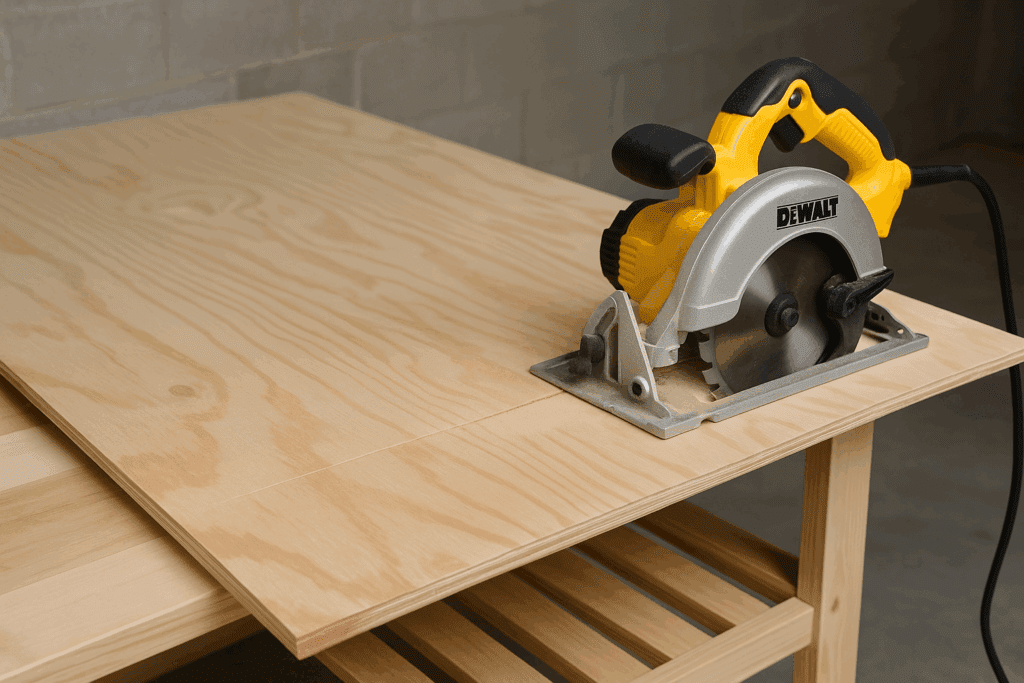
If you’re building for a twin or twin XL mattress, you can cut the Bunkie board from a single 4×8 sheet of plywood.
Cut to 39” x 75” (Twin) or 39” x 80” (Twin XL)
Sand all edges smooth to avoid splinters
Optionally round over corners using a ¼” round-over router bit
Construction Method 2: Overlay Panel (For Queen & King Beds)
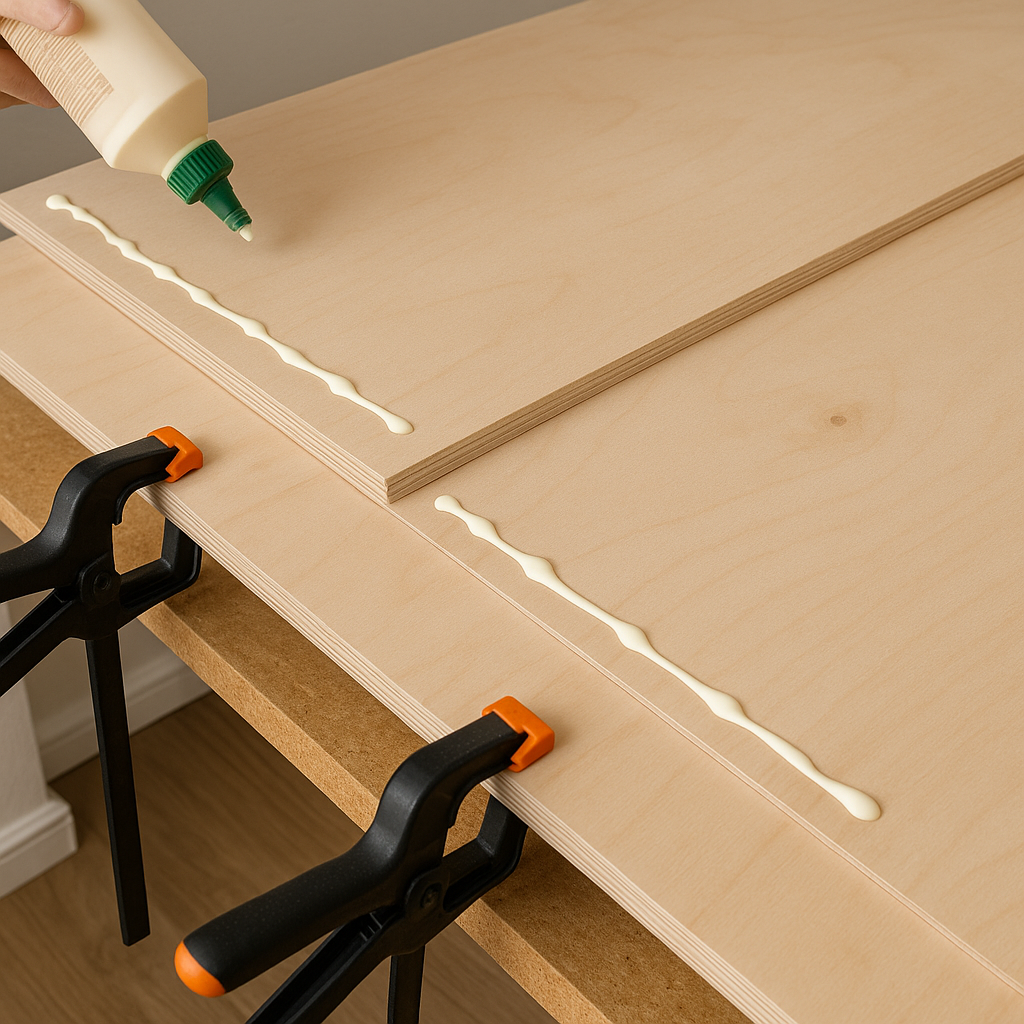
Larger beds require more than one sheet. Build an overlay panel by cutting two sheets and layering them with seams offset. Glue and screw the sheets together for strength.
Use two sheets of ⅜” plywood
Offset the joints so no seam runs through the entire width
Clamp and glue using wood adhesive
Reinforce with screws or brad nails
Construction Method 3: Folding Hinged Bunkie Board
Need portability? Make a hinged Bunkie board using two halves joined with a piano hinge. Great for tight hallways and small rooms.
Cut two equal panels
Attach a 48” piano hinge along the top
Add fabric or felt between the hinge and mattress for protection
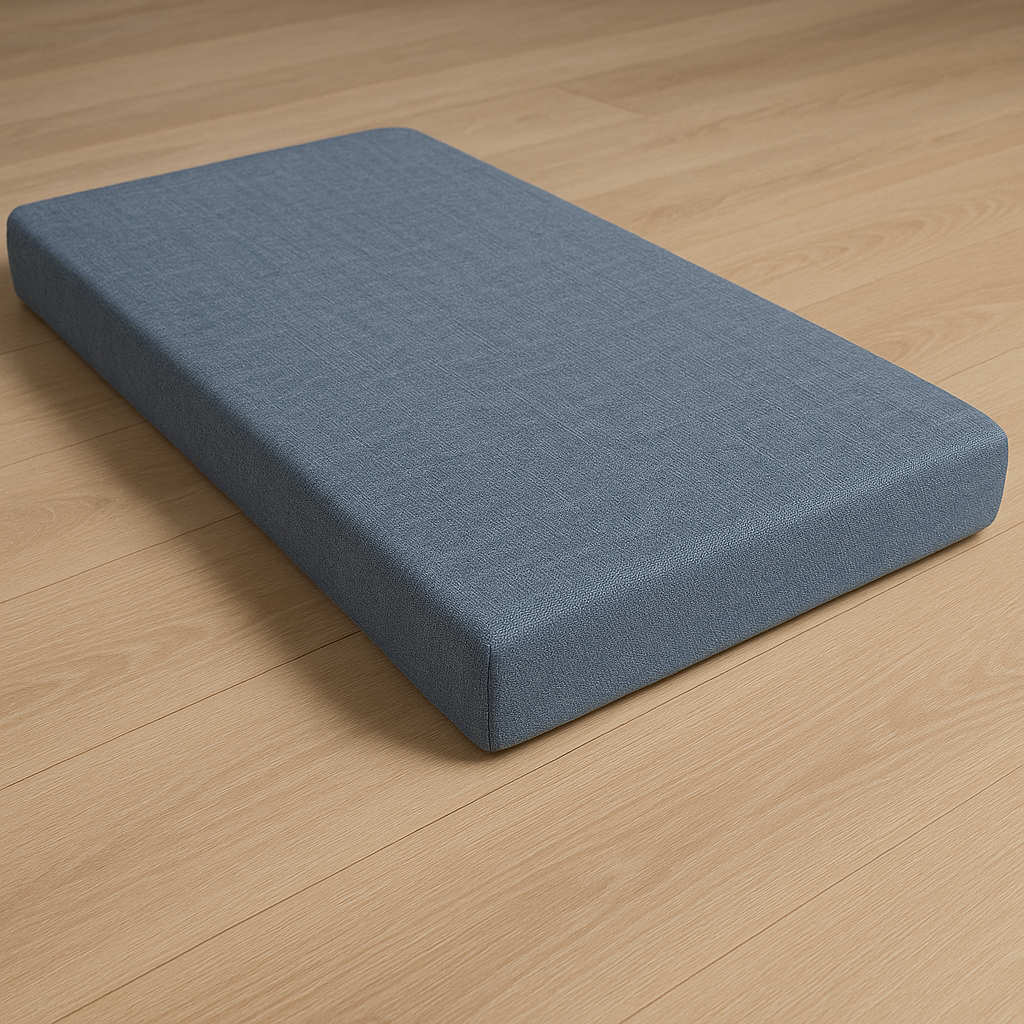
Cover both the bottom and top of the board to protect your mattress and improve aesthetics. Fold the edges of the fabric to avoid fraying and staple securely underneath.
Standard Mattress Sizes for DIY Bunkie Boards
Mattress SizeDimensionsTwin39” x 75”Twin XL39” x 80”Full (Double)54” x 75”Queen60” x 80”King76” x 80”California King72” x 84”
Make sure your final board is cut precisely to these dimensions for a snug, supportive fit.
Is a DIY Bunkie Board Worth It?
Absolutely. With the right plywood and some simple tools, a homemade Bunkie board can outperform store-bought options while saving you money. Whether you’re upgrading your platform bed or simply ditching the box spring, it’s a smart, low-profile solution for modern sleep setups.
Can You Use Plywood Instead of a Bunkie Board?
A common question people ask is: “Can I just use a sheet of plywood instead of buying a Bunkie board?” The short answer is yes, but with a few important caveats.
Plywood offers all the essential traits of a good mattress base—strength, rigidity, and even support. A single piece of CDX or AC-grade plywood is often stronger than a cheap store-bought Bunkie board. Most Bunkie boards on the market are built using similar plywood or slats, just covered in fabric and marked up in price.
However, you shouldn’t just toss a raw plywood panel under your mattress. Bare plywood has rough edges, potential splinters, and visible voids, especially if you’re using low-grade construction plywood. These can rub against the underside of your mattress or poke through a sheet over time, wearing it down and possibly voiding your mattress warranty.
If you’re going the DIY route, take the extra steps to:
Sand all edges smooth
Fill any knotholes or deep chips with wood filler
Round over the edges with a router if possible
Cover with quilt batting and upholstery fabric for a professional finish
In some cases, using plywood strips to create a slatted support system can be more breathable than a solid board. This is especially useful for foam mattresses, which need airflow to stay cool and avoid mold buildup.
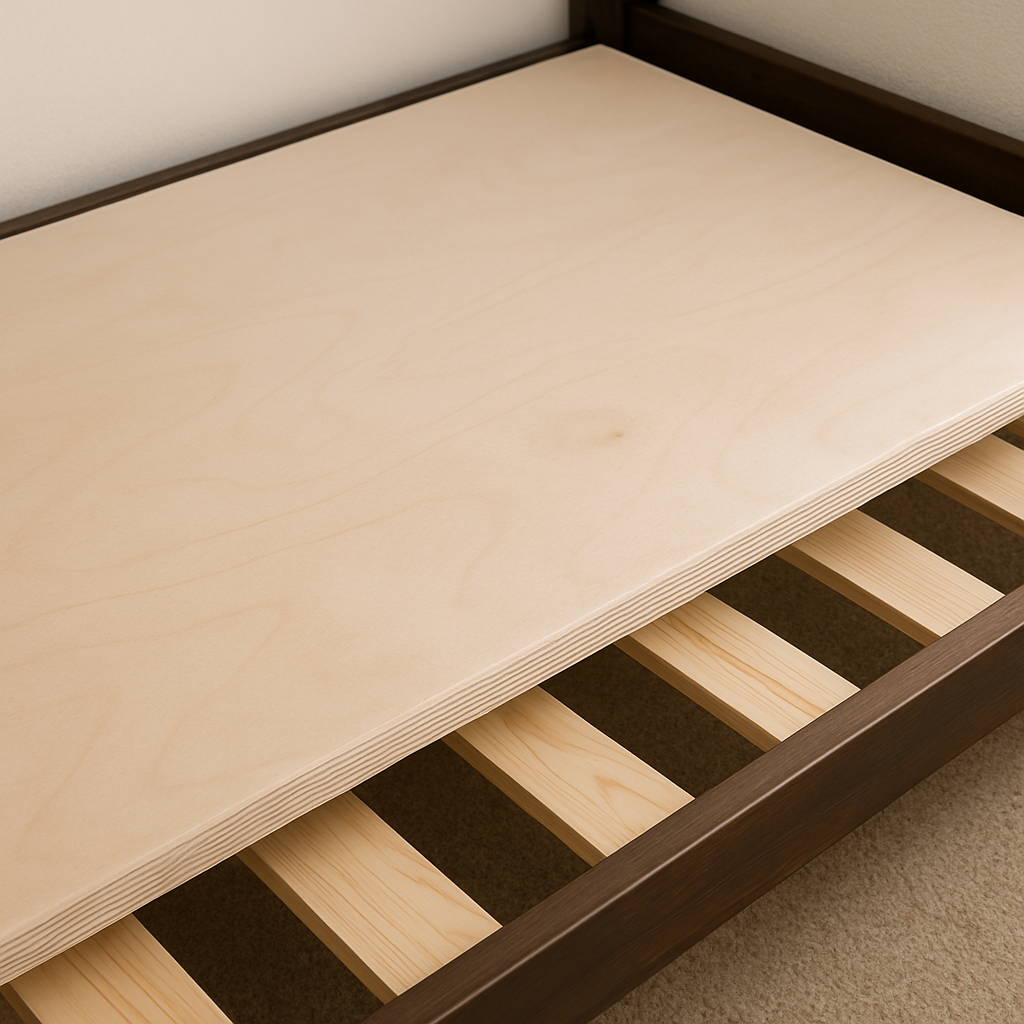
If your frame already includes some kind of slatted base, you can place a thin ¼” or ⅜” plywood sheet on top of the slats to create a makeshift Bunkie board with minimal cost.
🛏️ Pro Tip: Avoid MDF and particleboard. They’re heavy, prone to sagging, and don’t hold up well under mattress weight, especially over time or in humid environments.
So yes—plywood can absolutely replace a Bunkie board, and when done right, it can be stronger, more affordable, and longer-lasting. You just have to give it a bit of care and finish it like a piece of furniture, not a subfloor.
Bunkie Board vs. Box Spring: Which Is Better for Modern Beds?
If you’re shopping for a mattress base or planning a bedroom upgrade, you’ve probably asked: Should I use a Bunkie board or a box spring? While they serve similar roles—supporting your mattress—the way they do it and the outcome for your sleep comfort are quite different.
What’s the Difference?
Box Spring: Traditionally made of coils or a metal/wood frame with springs inside. Designed to absorb shock and add bounce.
Bunkie Board: A solid or slatted platform. Offers firm, no-bounce support—especially ideal for foam, hybrid, and memory foam mattresses.
Most modern mattresses, especially those with built-in layers or “pillow tops,” are designed to sit on rigid surfaces, not springy ones. Using an old-school box spring could make the mattress sag or feel lumpy over time. Some manufacturers will even void your mattress warranty if it’s placed on a traditional box spring.
Here’s when a Bunkie board is a better choice:
You’re using a platform bed or storage bed with slats that are too far apart
You want a lower-profile bed that’s easier to get in and out of
You’re trying to create a minimalist or modern bedroom aesthetic
When Might a Box Spring Still Be Useful?
A box spring can help if:
You’re using an innerspring mattress that requires bounce and airflow
Your bed frame isn’t sturdy enough on its own
You need extra height for the bed
But for most people today, especially those with newer beds and foam mattresses, a Bunkie board offers better long-term support, longer mattress life, and a more stable sleep surface.
And if you’re building your bed frame yourself, you can even integrate a Bunkie board directly into the design, avoiding the need for a separate box spring altogether.
So, in the battle between Bunkie boards and box springs, the modern choice is clear: Bunkie boards win for durability, compatibility, and style.
Do All Beds Need a Bunkie Board?
If you’re wondering whether your specific bed frame or mattress setup requires a Bunkie board, the answer depends on several factors:
The type of mattress
The frame design
The amount of support is already built into the frame.
Foam or Latex Mattresses
If you own a memory foam or latex mattress, you almost certainly need a flat, supportive base to prevent sagging. These materials are more flexible than innerspring mattresses, and without consistent support, they can wear out prematurely. A Bunkie board helps distribute weight evenly across the entire mattress surface.
✅ Verdict: Yes, you need a Bunkie board—or at least something that functions like one.
Slatted Bed Frames
Many modern bed frames use wooden slats, which may or may not provide enough support. If the slats are more than 2–3 inches apart, mattress warranties often become void. Placing a plywood Bunkie board on top of the slats fills the gaps and extends mattress life.
✅ Verdict: Use a Bunkie board unless your slats are very close together.
Adjustable Bases and Platform Beds
Some adjustable bases are designed to support mattresses directly without the need for any additional foundation. Similarly, solid platform beds with 100% surface coverage don’t require a Bunkie board, because one is essentially built in.
❌ Verdict: If your base is already solid and flat, you don’t need one.
Box Spring Owners
If you already use a high-quality box spring that doesn’t flex too much, and your mattress manufacturer allows it, you may not need a Bunkie board. However, if your box spring is old, soft, or noisy, swapping it for a low-profile plywood board can make a noticeable difference in comfort and stability.
⚠️ Verdict: Only keep the box spring if it’s firm, flat, and fully supportive.
In short, not every bed requires a Bunkie board, but most benefit from having one. Whether you’re trying to protect your mattress investment or just want a firmer sleep surface, adding a DIY Bunkie board made from plywood is one of the easiest and most affordable upgrades you can make to your bedroom.
How to Make a Shadow Box by Admin June 1, 2023 DIY Shadow boxes are a specialized form of frame, most commonly used for framing three dimensional objects so that they can be hung on the wall.…
Floating Shelves: Stylish Storage & Easy DIY Guide by Admin September 8, 2025 DIY I still remember the first time I put up floating shelves. It wasn’t some big renovation—just a Saturday project in my living room. Instead of…