Floors can tell you a lot about your home’s health. If they creak, sag, or bounce, chances are your joists need help. The most reliable solution is sistering joists, but before you grab a jack and some screws, you need to know the building code for sistering joists. Understanding these rules ensures your repair is safe, inspector-approved, and long-lasting.
What Is Sistering Joists and Why the Building Code for Sistering Joists Matter
Sistering Joists Defined as a Floor Joist Repair Code Solution
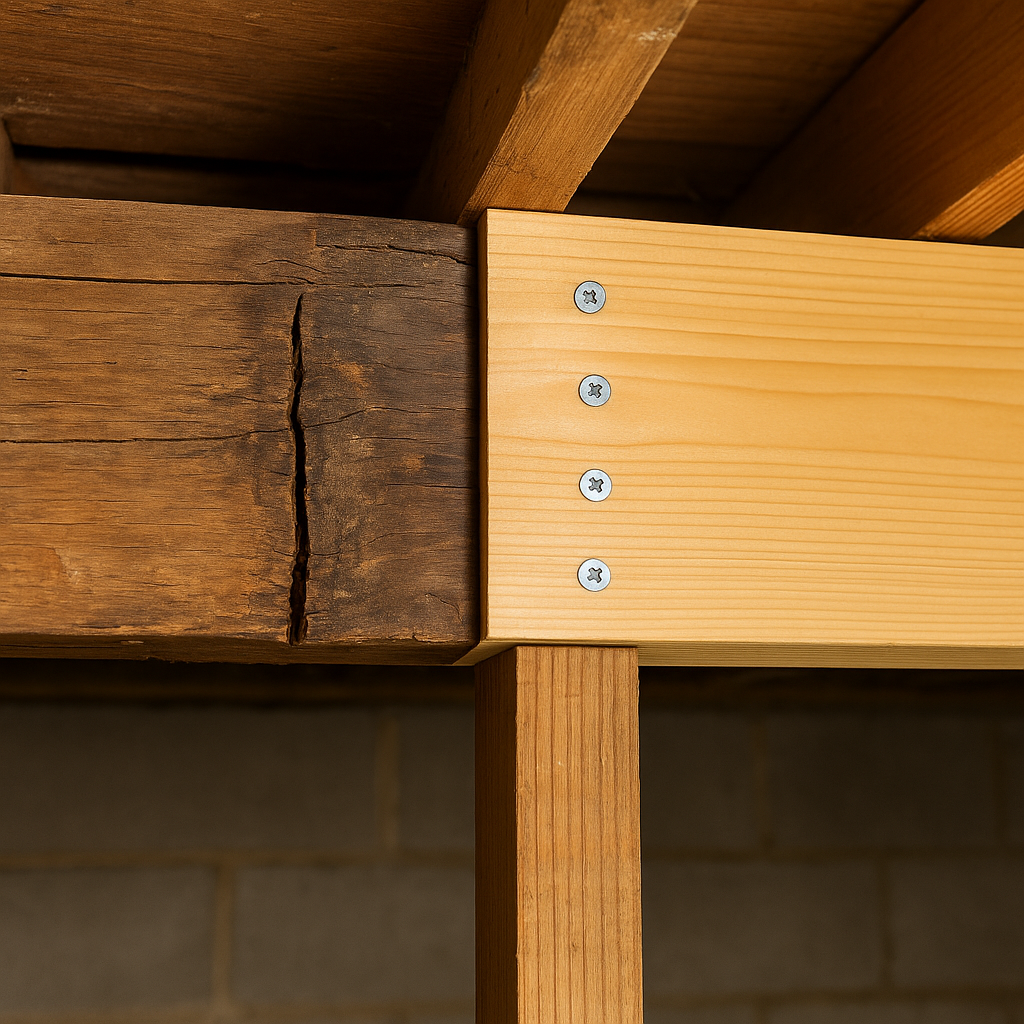
Sistering joists involves fastening new lumber to existing joists so they work together. It’s a common method for reinforcing floor joists, especially in older homes or during remodels.
Why the Building Code for Sistering Joists Is Important
Because sistering changes the structural load-bearing system, inspectors enforce the International Residential Code (IRC) to confirm compliance. If you don’t follow the building code, your repair may fail inspection or pose safety risks.
Core Building Code for Sistering Joists Requirements
Minimum Sister Joist Length Requirements Under Floor Joist Repair Code
Full-span sisters from wall to wall are preferred.
At a minimum, codes require one-third to one-half span coverage.
Short “patches” almost always fail.
Fastening Pattern in the Building Code for Sistering Joists
Use structural screws, lag bolts, or bolts—never nails.
Stagger fasteners every 16 inches on center.
Add construction adhesive to improve stiffness and reduce squeaks.
Bearing and Load Transfer in Joist Reinforcement Code
Full-span sisters must rest on the same supports.
Partial spans must overlap sufficiently to transfer loads safely.
Material and Size in the Building Code for Sistering Joists
Sister joists must match or exceed the original in depth, grade, and species.
A 2×10 should be sistered with another 2×10 or an LVL.
IRC Span and Deflection Standards for Sistering Joists
Floors must meet L/360 live load deflection requirements.
Permits and Inspections for Sistering Joists Code Compliance
Do You Need a Permit for Sistering Joists Under Code?
Yes—structural repairs like joist reinforcement require permits in nearly all jurisdictions.
What Inspectors Look For in Building Code for Sistering Joists
Inspectors verify span length, fastener type, lumber size, and proper bearing on supports.
Common Inspection Failures in Floor Joist Repair Code
Using nails instead of bolts or screws.
Short sisters below the minimum span.
Covering repairs before inspection approval.
Tools and Materials That Meet Building Code for Sistering Joists
Lumber and Engineered Beams for Floor Joist Reinforcement
The first thing inspectors look at is the size and quality of the lumber. Always choose dimensional lumber that matches your existing joists in depth, or upgrade to an LVL beam if you need extra strength. For example, if you’re reinforcing an old 2×8, don’t settle for a smaller board—using one that matches or exceeds the size helps keep the floor safe and up to code.
Structural Fasteners Required by Joist Reinforcement Code
Nails alone won’t pass inspection. Instead, use lag bolts, GRK RSS screws, or Simpson Strong-Tie bolts designed for structural loads. These fasteners not only provide the clamping pressure inspectors want to see, but they also make the connection between old and new joists feel rock solid underfoot.
Adhesives and Sealants for Building Code Compliance
Adhesive isn’t optional—it’s what helps the two boards act as one. A bead of construction adhesive between joists reduces squeaks and adds stiffness, while wood sealant keeps moisture from creeping in at the ends. Most pros treat adhesive as cheap insurance for a long-lasting repair.
Jacks and Clamps for Code-Compliant Joist Installation
Floors that have sagged for years won’t straighten themselves. A hydraulic jack and a temporary post let you raise the joist slowly, while clamps hold the new lumber tight as you drive in bolts or screws. Take your time with this step—rushing a lift is how drywall cracks or tile pops loose upstairs.
Step-by-Step Guide: How to Meet the Building Code for Sistering Joists
Inspecting Joists Before Repair to Meet Code
Check for rot, termites, or major cracks. Badly damaged joists may need full replacement. Take a flashlight and inspect along the entire length of the joist, not just the obvious sagging area. Look for water stains, soft spots you can poke with a screwdriver, or insect boreholes. If more than a third of the joist is compromised, most inspectors will require you to replace it rather than reinforce it. In many cases, sistering is only permitted on structurally sound lumber that can still carry some load. This step sets the stage for whether reinforcement or replacement is the right choice.
Cutting and Sizing Sister Joists for Floor Joist Repair Code
Match or exceed the original joist depth and grade. Full-span preferred; partial span must overlap one-third or more. Always measure the exact length you can fit before cutting. Obstructions such as HVAC ducts or plumbing often limit your options, but the goal should be to get as close to full span as possible. Use treated lumber or apply a preservative at the ends if they meet concrete or masonry. Remember, inspectors want to see that your sister joist isn’t undersized—the moment they see a smaller board, the repair will likely fail code.
Jacking Sagging Floors Before Sistering Joists Installation
Lift slowly with a hydraulic jack to avoid damaging walls or tile. Set the jack on a solid footing, such as a block of concrete or a thick scrap of lumber, so it doesn’t sink into the floor. Raise the joist no more than 1/8 inch per day if it’s sagged badly over time. Forcing it too quickly can crack plaster ceilings, shift doors out of square, or even pop floor tiles upstairs. Patience here not only prevents damage but also creates a straighter, stronger base for your sister joist to attach to.
Applying Adhesive and Fastening in a Code-Approved Pattern
Run adhesive along the joist, then fasten with staggered screws or bolts at 16-inch intervals. Use a heavy-duty construction adhesive designed for subfloors and framing. The glue acts as a cushion, reducing squeaks and binding the two boards into one stronger beam. Drive structural screws or bolts in a zig-zag pattern—one high, one low—to avoid splitting the lumber. If you’re working with long boards, use clamps to hold the sister tight to the original as you go. Inspectors look closely at this step, since fastening is what makes or breaks code compliance.
Ensuring Proper Bearing to Meet Joist Reinforcement Code
Ends must rest on supports; partial spans must overlap 3+ feet past weak areas. This means both joists should ideally sit on a wall plate or beam, not just “float” in the middle of a span. When that’s not possible, inspectors generally require significant overlap to distribute the load. A common mistake is stopping the sister just shy of a support—something that almost always gets flagged. To meet code, show that the new board is actually carrying weight, not just nailed alongside for appearance.
Don’t cover until the inspector signs off—hidden repairs often fail. Keep insulation, subflooring, or drywall off the area until the inspector can see the fastening, span, and bearing points. Most jurisdictions won’t accept photos; they want eyes on the actual repair. If you cover too soon, you may be ordered to rip it back open, wasting both time and money. Waiting for inspection approval might feel like a slowdown, but it’s the step that protects you legally and guarantees your repair is documented as safe.
Common Mistakes That Violate the Building Code for Sistering Joists
Using Undersized Lumber in Floor Joist Reinforcement
Smaller boards don’t meet code and reduce strength. For example, if your floor has 2×10 joists, adding a 2×8 alongside won’t be accepted by inspectors. The new lumber must match or exceed the depth of the existing joist, so both carry the load evenly. Using undersized lumber creates a weak point that undermines the repair, and it’s one of the quickest ways to fail inspection.
Relying on Nails Instead of Structural Fasteners
Nails alone won’t pass inspection. They don’t provide the clamping force needed to tie the joists together. Over time, nails can work loose with floor movement, leading to squeaks and structural separation. Building codes require lag bolts, structural screws, or carriage bolts because they lock boards together and transfer load effectively.
Short Sister Joists Below Code Standards
Anything under one-third span length is usually rejected. A short patch may look like it helps, but inspectors know it doesn’t truly reinforce the joist. Codes are written to ensure the sister covers enough of the span to distribute weight and resist sagging. If you try to slip in a short piece just over the damaged area, expect it to be flagged.
Skipping Adhesive in Joist Reinforcement Code Compliance
Without adhesive, squeaks and shifting are common. Construction adhesive helps bond the two boards into one solid beam. Without it, even well-fastened sisters can flex independently, which not only causes noise but also reduces strength. Inspectors often recommend adhesive as part of a best-practice repair, and leaving it out can result in callbacks or rework.
Covering Repairs Before Inspection Sign-Off
Inspectors must see the work before approval. If you cover a repair with insulation, drywall, or flooring, you’ll likely be ordered to tear it open again. This mistake wastes time and materials. Leaving the work exposed shows confidence in your repair and makes it easy for inspectors to verify proper fastening, overlap, and bearing.
FAQs About the Building Code for Sistering Joists
Can You Sister-Engineer I-Joists Under Code?
Usually not—manufacturers require specific methods.
What Size Lumber Meets the Building Code for Sistering Joists?
Match or exceed the existing depth and grade (e.g., 2×8 with 2×8 or LVL).
Do Sistered Joists Double Floor Strength Under Code?
Not exactly—strength improves significantly, but exact capacity depends on fastening and bearing.
How Long Do Sistered Joists Last If Built to Code?
When done correctly, they last as long as the original framing.
Final Thoughts: Why the Building Code for Sistering Joists Matters
The truth is, the building code for sistering joists isn’t there to make your life miserable—it’s there because bad floors fail, and they usually fail when you least expect it. I’ve stepped into houses where every stride across the living room made the china cabinet rattle. That’s not just annoying, it’s a sign that something structural is off.
I remember one job in a 1950s ranch where the homeowner swore the floor had “always been like that.” You could set a marble on one side of the room and watch it roll downhill to the kitchen. After sistering the joists—done the way the code requires—the change was night and day. The floor felt solid, and the homeowner joked that the dog no longer slid around.
And here’s the thing: inspectors aren’t the enemy. When they insist on longer sisters, proper bolts, or exposed work before sign-off, they’re making sure the repair isn’t just cosmetic. It’s about the strength you can rely on. When you follow those rules—span length, fastening patterns, inspections—you’re not just checking a box. You’re making sure the floor under your kids, your furniture, maybe even that heavy piano, will stay strong for decades.