Want to give your walls a fresh, custom look without blowing a paycheck? Plywood wall paneling might be your new best friend. It’s cheap, pretty easy, and, honestly, way more fun than you’d think. You don’t need to be a pro to get a great result. I know this because I went into the project with zero experience and still ended up with a wall I show off every chance I get.
So here’s what I did. The good, the frustrating, and the “why didn’t I just call someone?” moments—plus all the stuff that actually worked.
Why I Went With Plywood for My Walls
Paneling gets a bad rap. Some people still picture 1970s basements. But plywood today? Totally different story. It can look clean, modern, rustic, or just plain cool, depending on how you cut and finish it.
Also, I wasn’t about to haul drywall around or mess with joint compound. Plywood was lighter, easier, and didn’t cover me in dust.
You’ve got options. Here’s what I looked into before deciding:
Shiplap: Horizontal, clean lines.
Board & Batten: Vertical with trim—looks fancy.
Beadboard: Narrow grooves. Classic cottage feel.
Flat Panels: Smooth. Good for paint.
Slats: Narrow strips with gaps. Very Pinterest.
Scrap Look: Yep, random leftover pieces. Surprisingly cool.
Plywood works for all of these if you plan your cuts and spacing right.
Picking the Right Plywood (AKA: Overthinking at the Store)
Here’s what I figured out after standing in the lumber aisle way too long:
What You’re Choosing
Why It Matters
Wood Type
Birch = smooth. Pine = cheap. Oak = has attitude.
Grade
A/B = clean. C/D = rough, but cheaper.
Interior vs. Exterior
Interior works fine unless it’s a bathroom.
Thickness
1/4″ was perfect for me.
Grain
Visible = better for stain.
Weight
Don’t get something you can’t carry solo.
Let your plywood sit in the room where it’s going for 48 hours before installation. This will allow it to adjust to the temperature and humidity.
How to Prep Your Wall Before Installing Plywood Panels
This part might not be glamorous, but it’s the key to getting pro-level results. I skipped some of it at first—and yep, I had to redo a panel. Don’t be like me. Take the time to prep your wall right.
Step 1: Clean the Surface
Start by removing any existing wall hangings, outlet covers, or baseboards (if you’re going full height). Then vacuum or wipe the wall down. Dust, cobwebs, and loose paint are all enemies of adhesion.
If your wall has any flaking paint or cracked drywall, scrape it off with a putty knife. Trust me, nothing sticks to flaky stuff. I also ran a sanding sponge lightly over my wall to knock down high spots. You don’t want anything bulging behind your panel.
Step 2: Check for Studs
Use a stud finder and mark the location of the studs with a pencil. Even though the adhesive does most of the work, I still nailed into studs wherever I could for extra hold—especially around corners and edges.
Step 3: Fix Uneven Areas
Got a dip in the wall? You’ll feel it when the panel doesn’t lay flat. I had a weird bump where an old wall repair happened, and I used a bit of spackle to smooth it out. Let it dry and sand flush.
For bigger dips or curves, some folks shim the back of the panel with thin wood strips or even stacked cardstock. I didn’t go that far—but it’s an option if you’re chasing perfection.
Once your wall’s ready, bring the plywood into the room and let it rest flat against the wall for 48 hours. This lets the wood adjust to the humidity and temperature. Skipping this can lead to panels warping after they’re installed.
How I Installed the Plywood Panels (Not Fancy, but It Worked)
What I Used:
Tape measure
Plywood
Pencil
Jigsaw
Cordless drill
Level
Liquid Nails Heavy Duty Adhesive (Amazon)
Caulk gun
Rubber mallet
Finishing nails + hammer
My Actual Process:
Measured everything – Not just once. A few times. Still bought too much plywood.
Let the panels acclimate – Two days in the room, just leaning against the wall.
Laid out the design – I moved panels around like puzzle pieces until it looked right.
Cut panels – Used a jigsaw and a sawhorse. Not perfect, but close enough.
Dealt with outlets – Traced them and cut carefully. Shut the power off first.
Smoothed the wall – Peeled flaky paint and sanded any high spots.
Applied glue – Not too much. Smeared it like I was icing a cake.
Pressed panels on – Rolling pin from the kitchen helped.
Tacked nails in – Just a few in the corners to hold things.
Finished it – I stained mine light brown. Might paint it next time.
How to Finish and Seal Plywood for Long-Lasting Style
Once your panels are up, you’ve got options: paint, stain, or just clear-coat it and call it a day. I went with a light brown stain, but I played around with samples first—and you should too.
Sanding for a Pro Finish
Even if your plywood feels smooth, run 220-grit sandpaper over it. Sand with the grain. If you’re planning to stain, this helps open up the pores and evens out the surface so the color soaks in consistently.
For painted finishes, I recommend sanding, priming with a wood primer, then painting with a high-quality latex paint. Satin or semi-gloss finishes are great for wiping down later.
Staining Tips
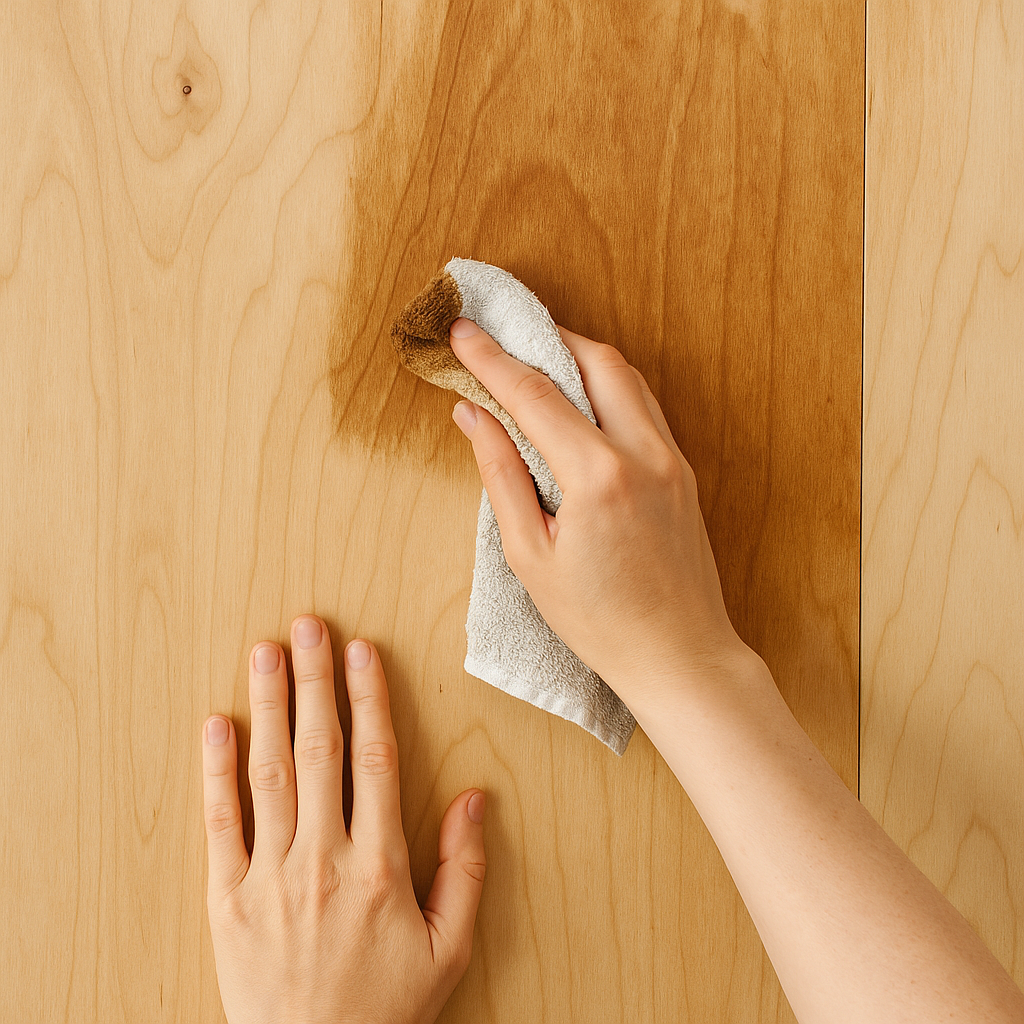
If you want a natural wood vibe, use a gel stain or oil-based stain and wipe it on with a rag. Let it sit for a few minutes, then wipe off the excess. Do this in sections, or it’ll get blotchy.
I also used a pre-stain wood conditioner to keep the color even—especially helpful with softwoods like pine.
Clear Coating
A clear polyurethane coat (water-based for fast drying) protects the paneling without changing the color too much. I used a foam brush for application and added two coats. Don’t skip this—it keeps fingerprints and smudges from ruining the look.
Extra: Accent Trim
I added simple wood trim at the top and bottom to make it feel finished. It hides any gaps and makes the whole wall feel more intentional.
Are you thinking about trying it? Start small. A nook, hallway, or even a closet. It’s way more doable than it seems.
And if you do it, seriously, send a picture. I want to see how yours turns out.
Related Posts:
RV Paneling: Repair, Replacement, and Maintenance Guide by Admin September 14, 2025 Installing Owning a recreational vehicle brings freedom and adventure, but it also comes with upkeep. One of the biggest hidden problems RV owners encounter is RV…
How to Finish Basement Walls (Step-by-Step Guide) by Admin July 15, 2026 DIY I've been in enough basements — my own and other people's — to notice a pattern: many finished basement wall failures begin with moisture-management decisions…
Best Plywood for Bathroom Walls, Subfloors & Vanities by Amy Reed November 24, 2025 Installing Plywood is ideal for bathrooms because of its strength, moisture resistance, and adaptability to any residential construction project. Choosing the best plywood for bathrooms depends…