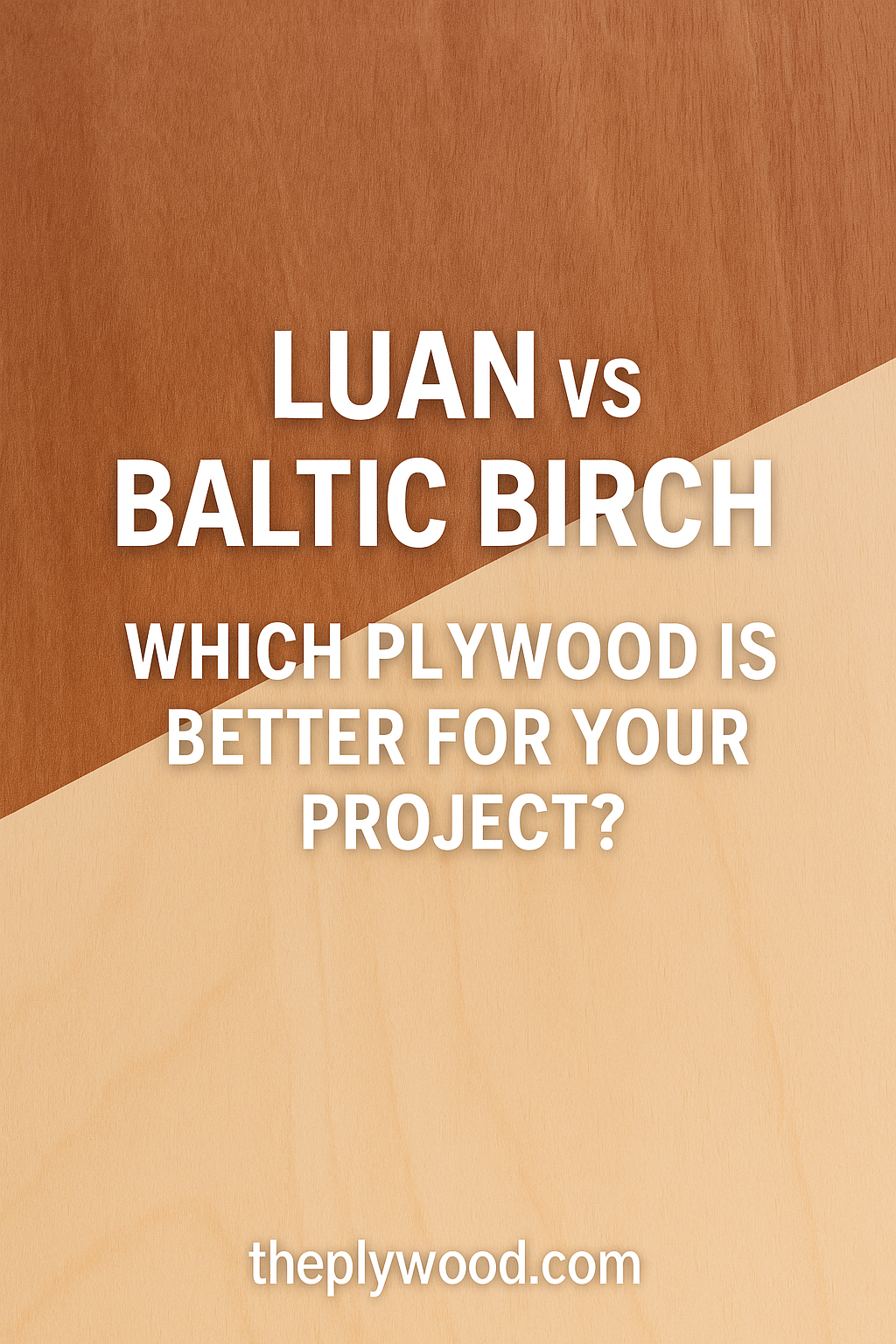
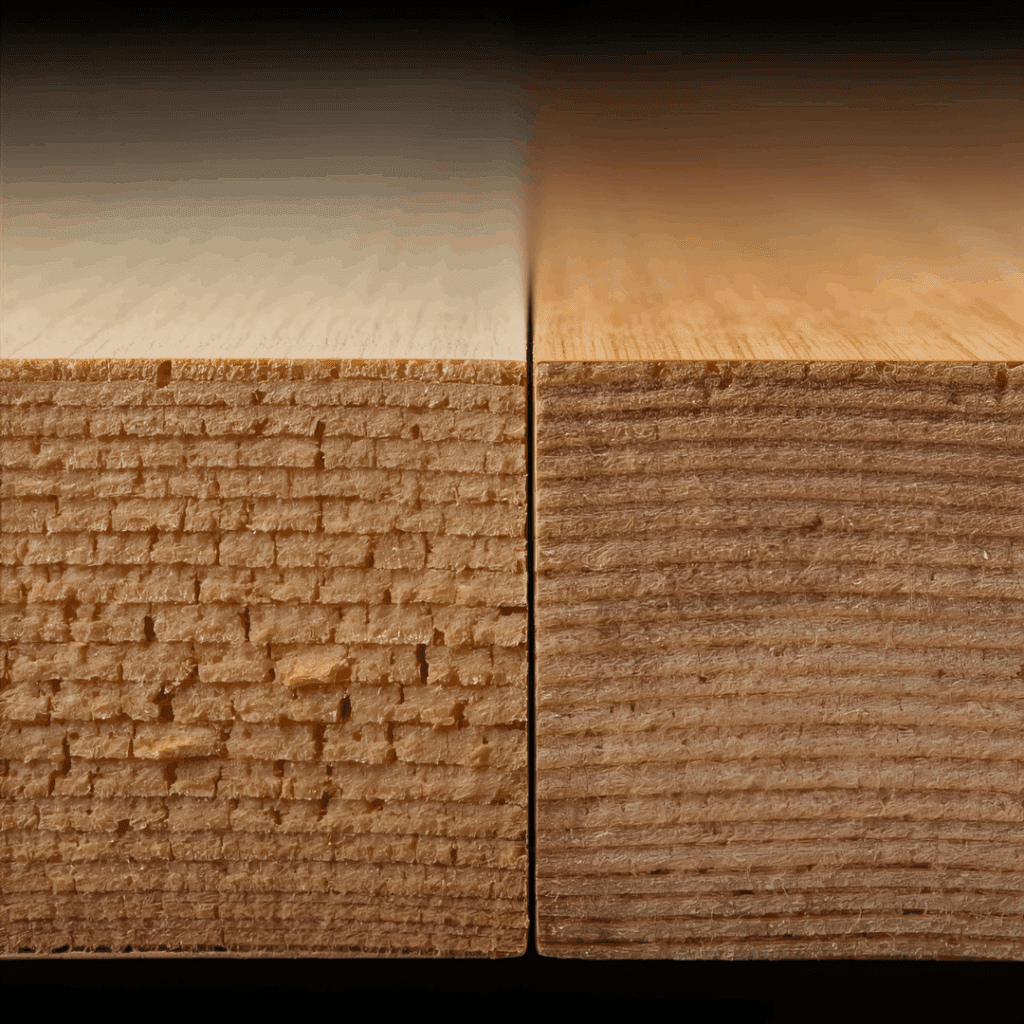
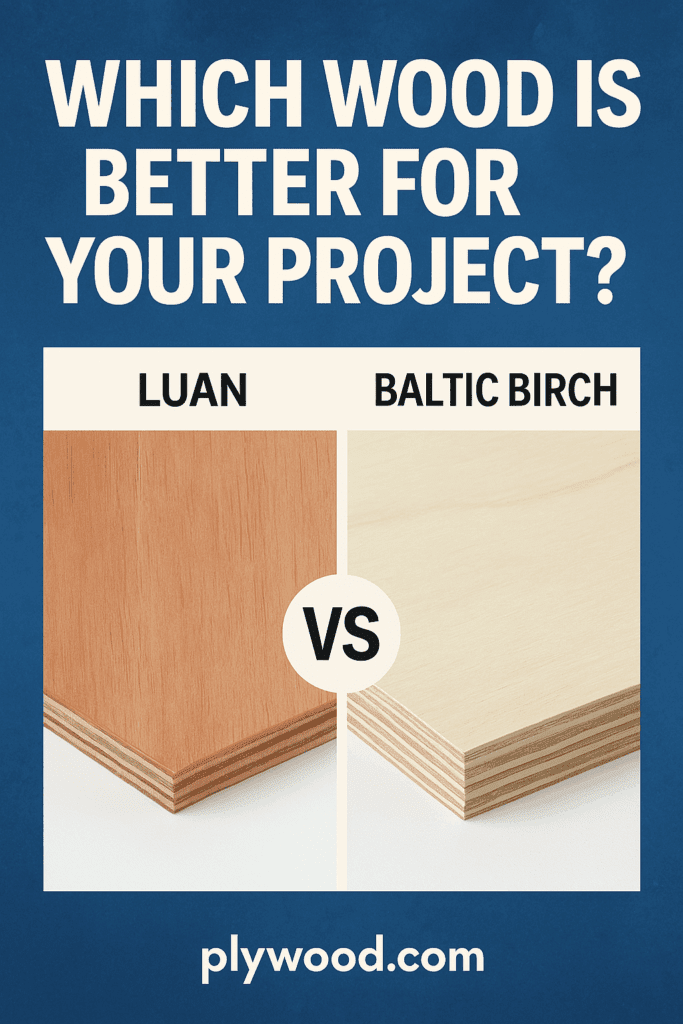
If you’ve ever compared Luan vs Baltic Birch plywood at your local hardware store, you know they look similar but perform very differently once you start cutting. Luan and Baltic birch stacked on the racks — two plywood types that look similar at first glance but behave completely differently once you start cutting. I’ve used both over the years, and while they each have a place in the shop, choosing the right one really depends on your project.
Let’s break down the differences between Luan and Baltic birch in terms of construction, strength, appearance, cost, and best uses, so you know exactly which to grab next time you’re standing in front of that plywood wall, trying to decide.
What Is Luan Plywood?
Luan (sometimes spelled Lauan) comes from tropical hardwood trees, mostly from the Philippines, Malaysia, or Indonesia. It’s lightweight, flexible, and often used as an underlayment or for interior paneling. You’ll sometimes see it labeled as “Philippine mahogany,” though that’s a marketing stretch — it’s not true mahogany but a softer tropical species like Shorea or Meranti.
Luan panels are built from thin veneers, usually three or five plies, with a relatively soft core. The outer face has a smooth, reddish-brown grain that stains beautifully but can dent easily if mishandled.
Because of its thin profile — most commonly ¼ inch — and low cost, Luan became the go-to choice for budget-friendly furniture backings, door skins, and subfloor underlayment.
Baltic birch is a premium plywood that’s engineered differently from almost everything else at the store. It’s made entirely from birch hardwood veneers — no filler layers, no softwood core. Each ply is thin, dense, and uniform, glued with strong, waterproof adhesive. The result is a panel that’s incredibly stable and smooth from edge to edge.
You’ll usually find it in 5×5-foot sheets (a European standard) instead of the U.S. 4×8 size. Baltic birch is prized for furniture, cabinetry, jigs, and projects that need precision and strength. The edge quality is so good that many woodworkers leave it exposed instead of banding it.
📘 Related read:Best Plywood for Cabinets — see why Baltic birch tops most builder lists for cabinetry projects.
Luan vs Baltic Birch: Side-by-Side Comparison
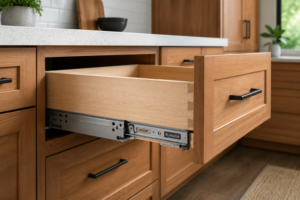
When it comes to workability, Luan vs Baltic Birch behaves in almost opposite ways. Luan is light and flexible, while Baltic Birch is dense and perfectly flat. Many woodworkers debate Luan vs Baltic Birch for cabinetry, but it often comes down to strength and finish quality. In the end, the Luan vs Baltic Birch decision depends on your goals—Luan for affordability, Baltic Birch for longevity and precision.
Feature
Luan Plywood
Baltic Birch Plywood
Wood Type
Tropical hardwood (Shorea/Meranti)
100% birch hardwood
Veneer Layers
3–5 plies
7–13 plies
Core Quality
May contain voids or soft spots
Solid birch core, no voids
Strength
Light and flexible
Dense, stiff, and strong
Surface Finish
Smooth, reddish tone
Pale, uniform grain
Best Uses
Underlayment, paneling, crafts
Furniture, jigs, cabinetry
Cost
Budget-friendly
Premium-priced
Workability
Cuts easily but splinters
Machines cleanly, holds screws well
Durability and Strength
When it comes to sheer strength, Baltic birch wins easily. Its multiple birch plies give it superior resistance to warping and twisting. You can screw into the edges without worrying about tear-out, which is why it’s ideal for precision woodworking or shop jigs that see heavy use.
Luan, on the other hand, is much softer. It can flex slightly under pressure, which is great for curved projects or lightweight applications like drawer bottoms, but not for load-bearing surfaces. If you’ve ever installed a vinyl floor, you’ve probably used Luan as a smooth, affordable underlayment — but you’d never build a workbench out of it.
Moisture Resistance and Longevity
Neither of these plywood is meant for outdoor exposure, but Baltic birch holds up better to humidity and minor moisture. Its multiple birch veneers and tight glue bonds resist delamination, even in unheated garages or basements. Luan tends to swell or warp faster if left in damp air or near floors that collect condensation. For kitchen or bath cabinetry, Baltic birch provides a longer service life and stays flatter over time. If you plan to seal Luan, use a waterproof polyurethane or epoxy coating and keep it well ventilated indoors.
Appearance and Finish
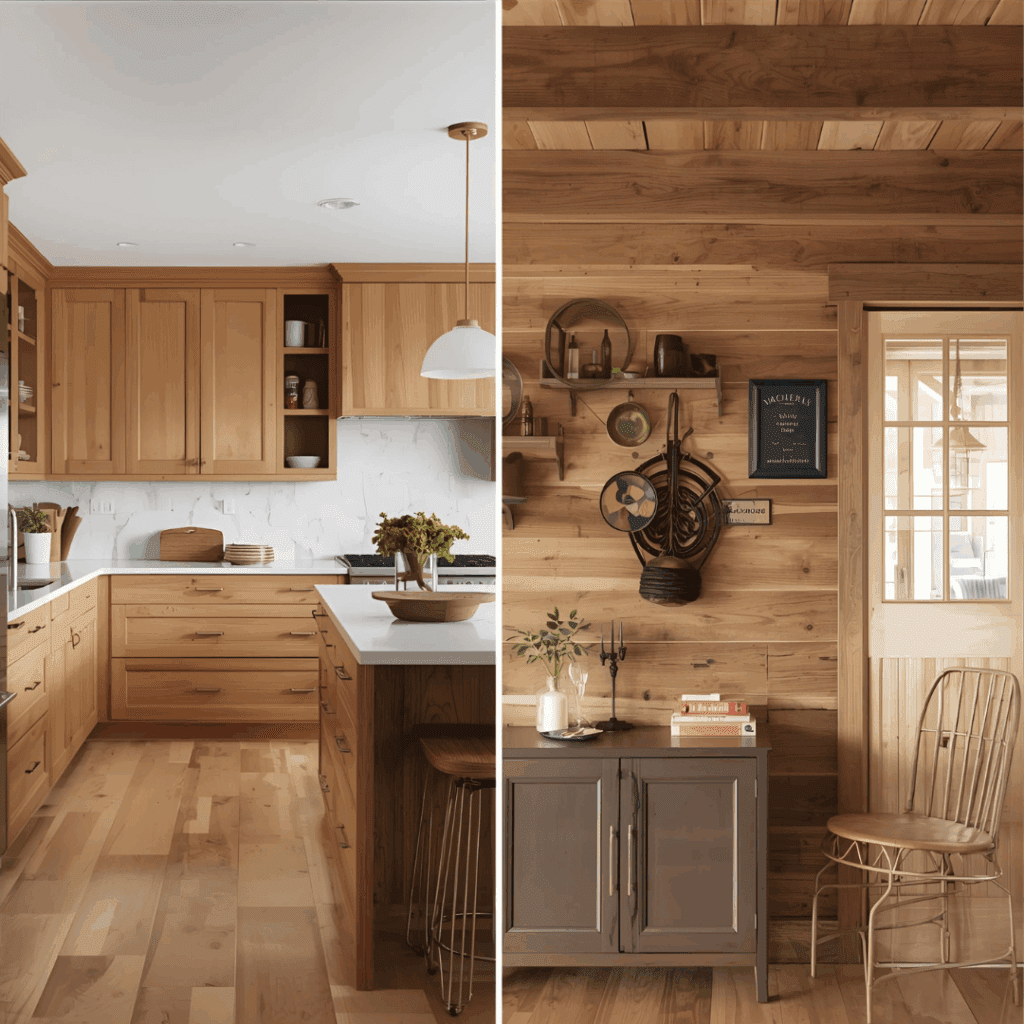
Both woods have distinct looks. Luan’s warm, reddish hue gives it a classic tropical feel. When stained, it resembles mahogany at a fraction of the cost — perfect for decorative panels or crafts.
Baltic birch is lighter, more modern, with a consistent blond tone that takes stain evenly or looks great with a clear coat. It’s the plywood of choice for Scandinavian-style furniture, minimalist cabinets, or anything that highlights natural wood tone.
If you plan to paint, both can work. Just note that Luan’s softer grain might absorb more primer, while Baltic birch’s smooth surface needs a light sanding for adhesion.
Workability and Tools
Both Luan and Baltic birch are easy to cut with standard woodworking tools, but they feel different in your hands.
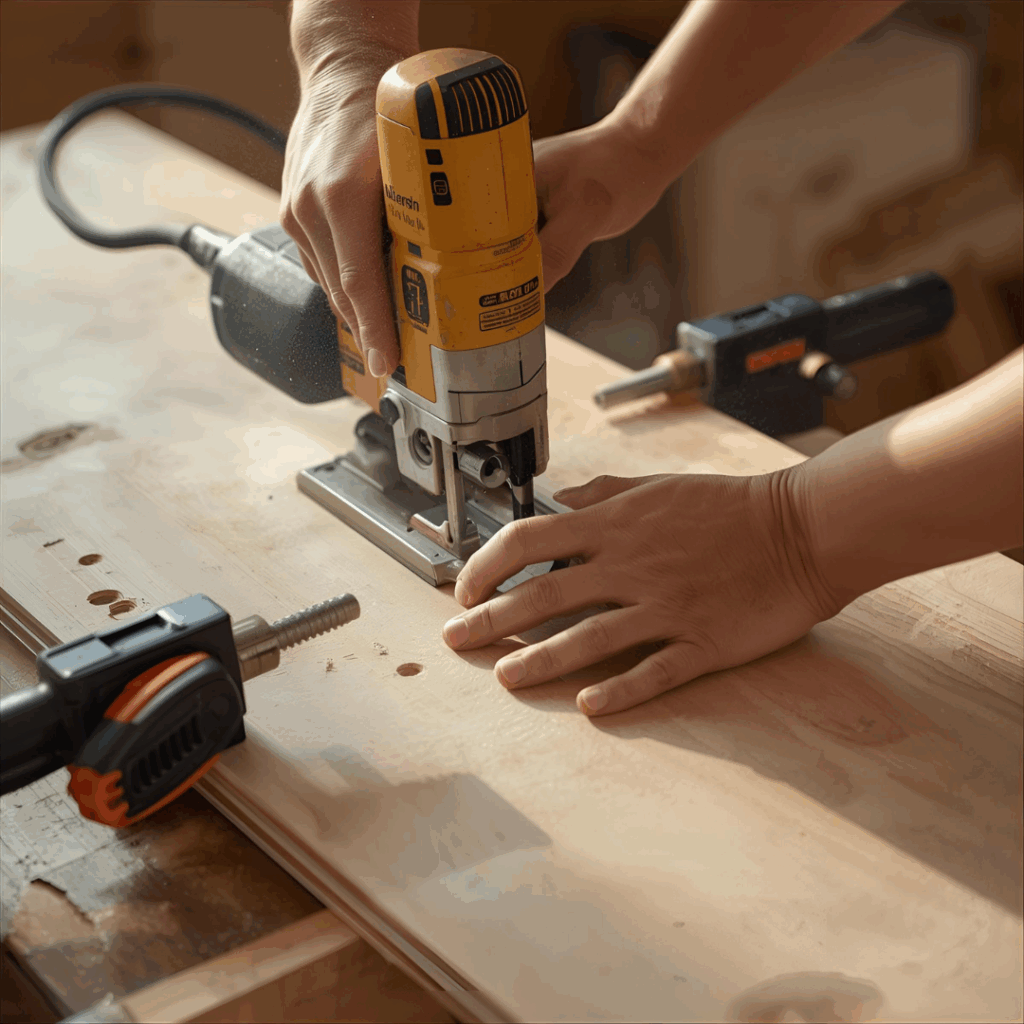
Luan cuts easily with a jigsaw or circular saw, but the thin veneer edges can splinter if you rush the cut. Always use a fine-tooth blade and painter’s tape along the cut line.
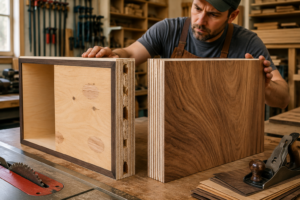
Baltic birch feels denser. It machines beautifully and sands to a flawless surface. You can drill or screw near the edges without blowout, making it great for joinery.
If you’re building furniture or jigs, Baltic birch’s uniformity makes setup easier and more predictable. If you’re covering a wall or floor, Luan’s lighter weight will save your arms.
Sound and Acoustic Performance
If you’re building speaker boxes, instrument panels, or anything where sound quality matters, the plywood’s density makes a difference. Baltic birch performs exceptionally well in acoustic builds because its solid birch core vibrates evenly and resists buzz or flexing. That’s why many professional speaker cabinets use it. Luan, on the other hand, absorbs vibration more easily, which can dull resonance. For soundboards or enclosures where tone and strength are important, Baltic birch is the clear winner. For decorative sound panels, however, Luan’s lighter weight can still work fine and save money.
Here’s where the biggest difference shows up. Luan is usually one-third the cost of Baltic birch per sheet. That price gap makes sense — Luan uses fewer plies, softer cores, and lower-cost materials.
But remember, cost doesn’t always mean value. Baltic birch lasts far longer and resists warping even in slightly humid conditions. If you’re making a long-term piece like cabinetry, the upfront cost pays for itself.
If you just need something light and easy for a craft or interior project, Luan makes more sense.
💡 Pro Tip: If you’re on a budget but want a similar look, try a birch veneer plywood instead of true Baltic birch. It’s often labeled as “cabinet-grade birch” and costs less per sheet.
I try to think about where the wood I’m using actually comes from. A lot of the Luan sheets sold in the U.S. are cut from tropical hardwoods in Southeast Asia. Some mills there do a great job managing their forests, but others still clear old growth without much oversight. If you want to use Luan, it’s worth asking your supplier whether it’s FSC certified—that label means the wood came from a responsibly managed source.
Baltic birch, on the other hand, usually comes from northern Europe. Those forests are tightly regulated, and birch trees grow back fairly quickly, so the impact is lighter. When both are bought from reputable sources, you can feel good about using them, but Baltic birch tends to win a little on the sustainability side. It’s easier to trace, and the production process wastes less wood overall.
Environmental and Sourcing Considerations
Another factor worth noting is sustainability. Luan production has faced criticism for deforestation in Southeast Asia. Look for panels certified by theForest Stewardship Council (FSC) to ensure responsible sourcing.
Baltic birch typically comes from managed forests in Northern Europe and Russia, with tighter regulations. The species grows quickly and is generally harvested sustainably.
For eco-minded woodworkers, checking for FSC or PEFC labels on either product is a good habit.
Finishing Tips for Both
Seal Luan before staining to avoid blotching. A light coat of wood conditioner helps even absorption.
Sand Baltic birch to 220 grit before clear coating for a silky finish. It takes polyurethane or Polycrylic beautifully.
For painted projects, use a high-adhesion primer on both surfaces to prevent grain raise.
Avoid oil-based stains on Luan unless you test first — some resins react unevenly.
For sealing, I’ve had the best luck with Minwax Polycrylic Clear Satin— it dries fast, doesn’t yellow, and keeps the grain natural.
If you’re still not sure which to choose, here’s a quick test project idea.
Cut two small panels — one Luan, one Baltic birch — around 12×12 inches each. Sand and finish them side by side. You’ll instantly feel the difference. The Luan will be lighter and warmer; the Baltic birch will feel solid and balanced.
I once used both in the same project — a set of wall-hung cabinet doors. Luan for the inserts, birch for the frame. The mix looked great and cut the cost in half.
Final Thoughts: Which Should You Choose?
So, Luan vs. Baltic Birch — who wins? It depends entirely on what you’re building.
If you need something light, flexible, and affordable, go with Luan. It’s perfect for underlayment, interior walls, and quick decorative builds.
If you want precision, durability, and a premium look, Baltic birch is the clear winner. It’ll outlast almost any other plywood and give your project a professional, clean edge.
For me, Luan is the plywood I grab for fast fixes and prototypes. Baltic birch is what I use when I’m building something I plan to keep.
Both have their place — and once you’ve worked with each, you’ll know exactly which belongs in your next project.
Related Posts:
Baltic Birch vs. Birch Plywood Comparison Guide by Admin June 14, 2026 DIY If you have ever built a cabinet drawer, routed a seamless sign on a CNC machine, or tried to laser-cut intricate models, you know that…