The title of “King of Woods” isn’t just marketing fluff—it’s a biological reality. However, for most homeowners and builders, teak wood is also the “King of Expensive Mistakes.”
In 2026, the global market for Tectona grandis (True Teak) is estimated at over $55 billion. As supply chains shift and “lookalike” species flood the market, the difference between a 70-year investment and a $2,000 pile of rotting garden scrap often comes down to a single decision made at the point of purchase.
What is teak wood?
Teak wood is a tropical hardwood known for its natural oils, which make it highly resistant to water, rot, and insects. It is commonly used for teak outdoor furniture, boat building, and high-end woodworking because it can last decades without significant maintenance.
🏗 Where Teak Wood Makes Sense (And Where It Doesn’t)
Not every project justifies the premium price of teak wood—and using it incorrectly is one of the most expensive mistakes in woodworking.
Best Uses:
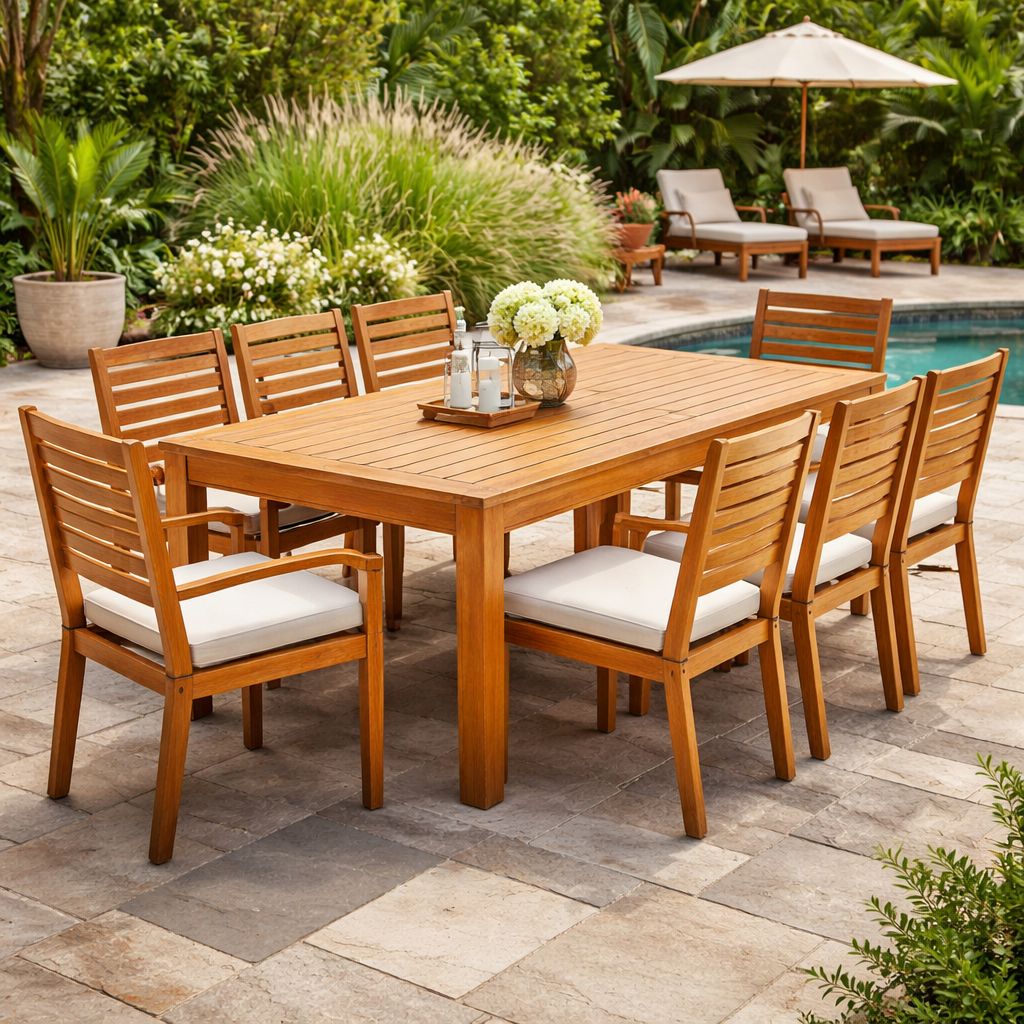
Outdoor Furniture (Patios, Pool Areas): These applications fully leverage teak’s natural oils, rot resistance, and dimensional stability.
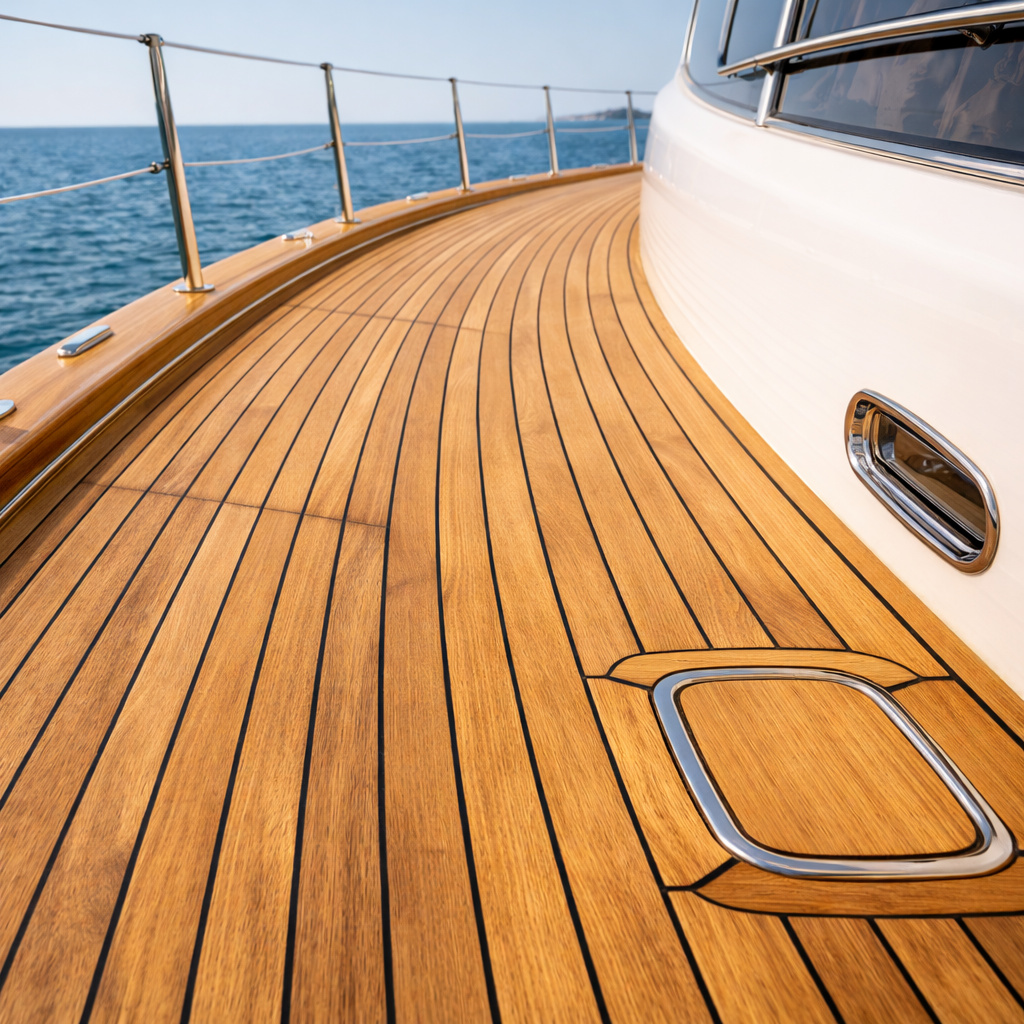
Marine Environments (Boats, Docks): Teak is the only timber that remains non-slip when wet and resists the corrosive effects of saltwater.
High-End Exterior Trim and Cladding: Ideal for architectural statements where longevity and UV resistance are paramount.
Where Teak is Overkill:
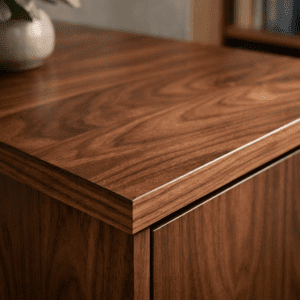
Indoor Cabinets: Unless in a high-steam spa environment, cheaper hardwoods perform just as well.
Framing or Structural Lumber: Using teak for internal framing is a massive waste of resources.
Hidden Components: Never use teak for drawer slides or blocking where it won’t be seen or exposed to weather.
💸 Cost Mistake: Using teak indoors where oak or walnut performs identically can double or triple your project cost with zero functional benefit.
👉 Rule: Use teak only where moisture, UV, or longevity actually matter.
🛒 Best Teak Wood Products (Tested Picks)
If you are looking to invest in authentic teak wood furniture, these are the top-rated Grade A options currently dominating the 2026 market.
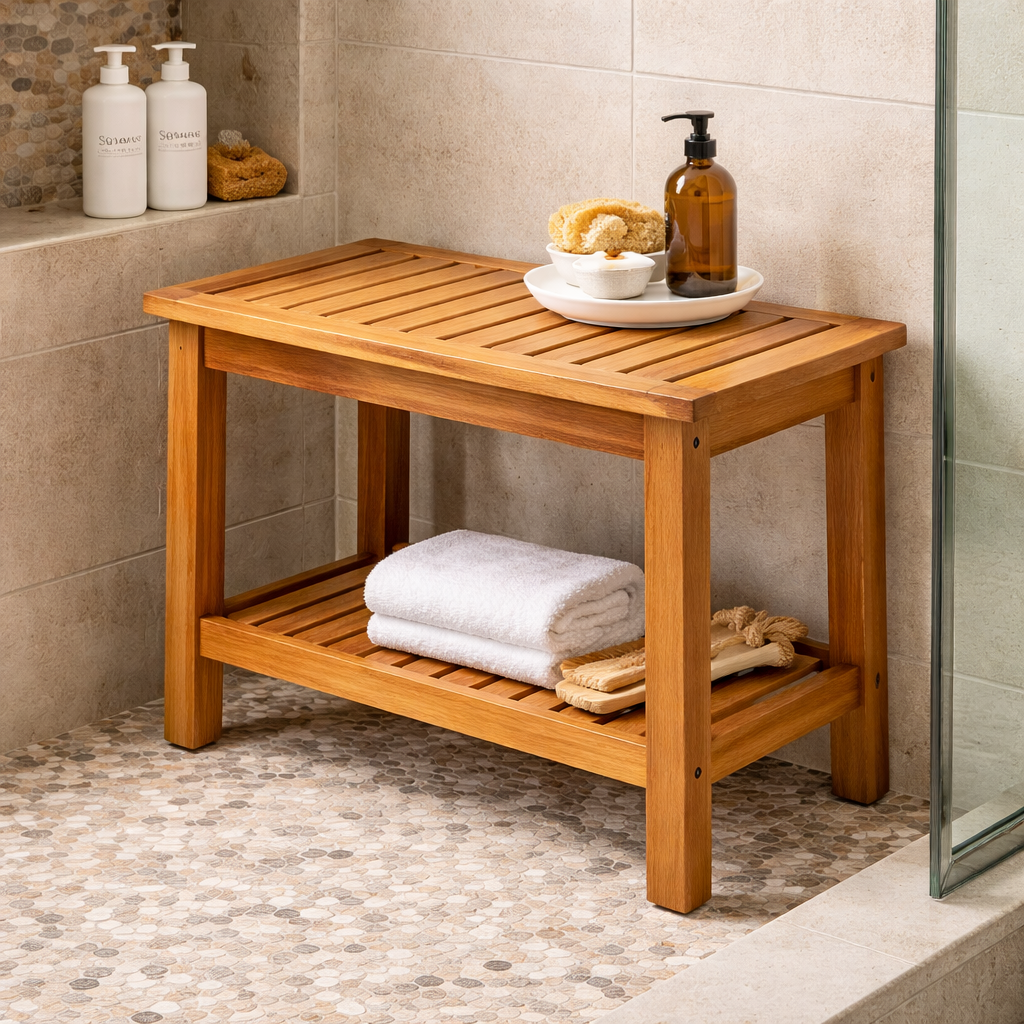
Naturally waterproof and slip-resistant, this is the ideal way to enjoy the benefits of teak wood in a high-moisture indoor environment without the $5,000 price tag.
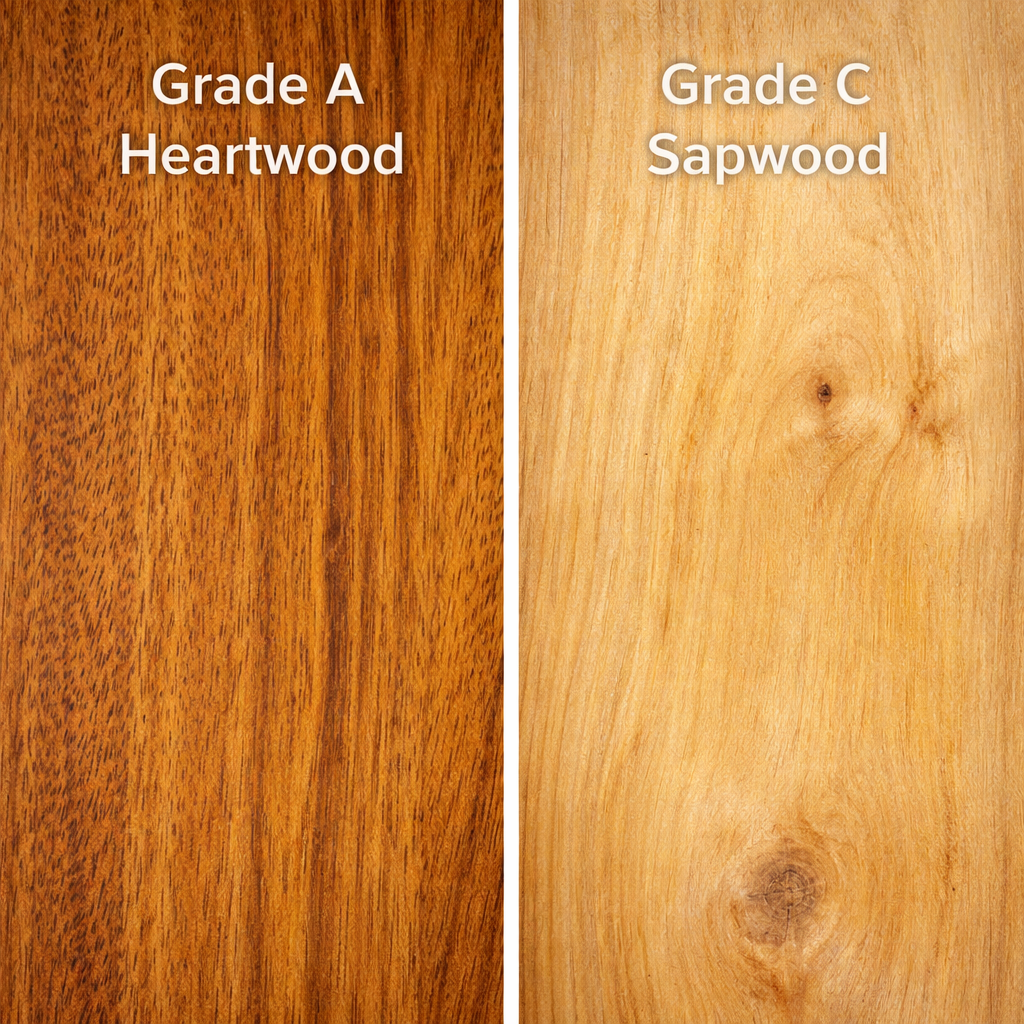
Use this table to avoid the mistake of overpaying for inferior Grade C “sapwood” disguised as heartwood.
Feature
Grade A Teak (Heartwood)
Grade B/C Teak (Sapwood)
“African Teak” (Iroko)
Primary Use
Luxury Yachts, Outdoor Sets
Indoor Furniture, Trim
Decking, Value Projects
Is Teak Wood Waterproof?
Naturally (High Oil)
No (Requires Sealing)
Partially
Lifespan
50–70+ Years
5–15 Years
20–30 Years
Teak Wood Price
$25 – $45 per bd/ft
$10 – $18 per bd/ft
$8 – $15 per bd/ft
Silica Content
High (1.4%)
Low (Vulnerable)
Moderate (0.5%)
💸 Teak vs Alternatives: Real Cost Over 10 Years
Most buyers focus on the upfront price. That’s the mistake that leads to long-term regret. When you analyze the teak wood price over a decade, the “expensive” wood often becomes the cheapest option.
Material
Initial Cost (Dining Set)
Lifespan
Replacements (10yr)
Total 10-Year Cost
Grade A Teak
$3,000
25–70 yrs
0
**$3,000**
Acacia
$800
5–7 yrs
2x
**$2,400+**
Cedar
$1,200
8–10 yrs
1x
**$2,400+**
Composite
$2,500
10–15 yrs
1x
**$2,500–$5,000**
Conclusion: While the initial investment in teak wood furniture is higher, its zero-replacement requirement makes it the most fiscally responsible choice for homeowners.
🧠 What Contractors Know About Teak (The “Real Test”)
Summary: Professionals prioritize hardware and chemical compatibility over the wood’s appearance.
As a contractor who has handled thousands of board feet of exotic lumber, my biggest regretisn’t the wood failing—it’s the hardware. Teak wood contains high levels of silica and natural acids that act as corrosive agents against low-quality metals.
The Warning: Standard galvanized or zinc screws will corrode and cause “black bleed” stains within months. These stains penetrate the grain and are permanent.
The Fix: Always use 316 Marine-Grade Stainless Steel.
The Bonding Test: Standard Wood Glue will fail on teak because the natural oils (tectoquinones) prevent the glue from soaking into the fibers. You must wipe joints with acetone or denatured alcohol literally seconds before using.
🧪 Real-World Test: How Teak Performs After 5 Years Outdoors
Summary: What actually happens to your investment when exposed to the elements?
In a five-year uncontrolled exposure test I conducted on the New Jersey coast, I compared Grade A teak wood furniture against premium Cedar and White Oak. The results were stark:
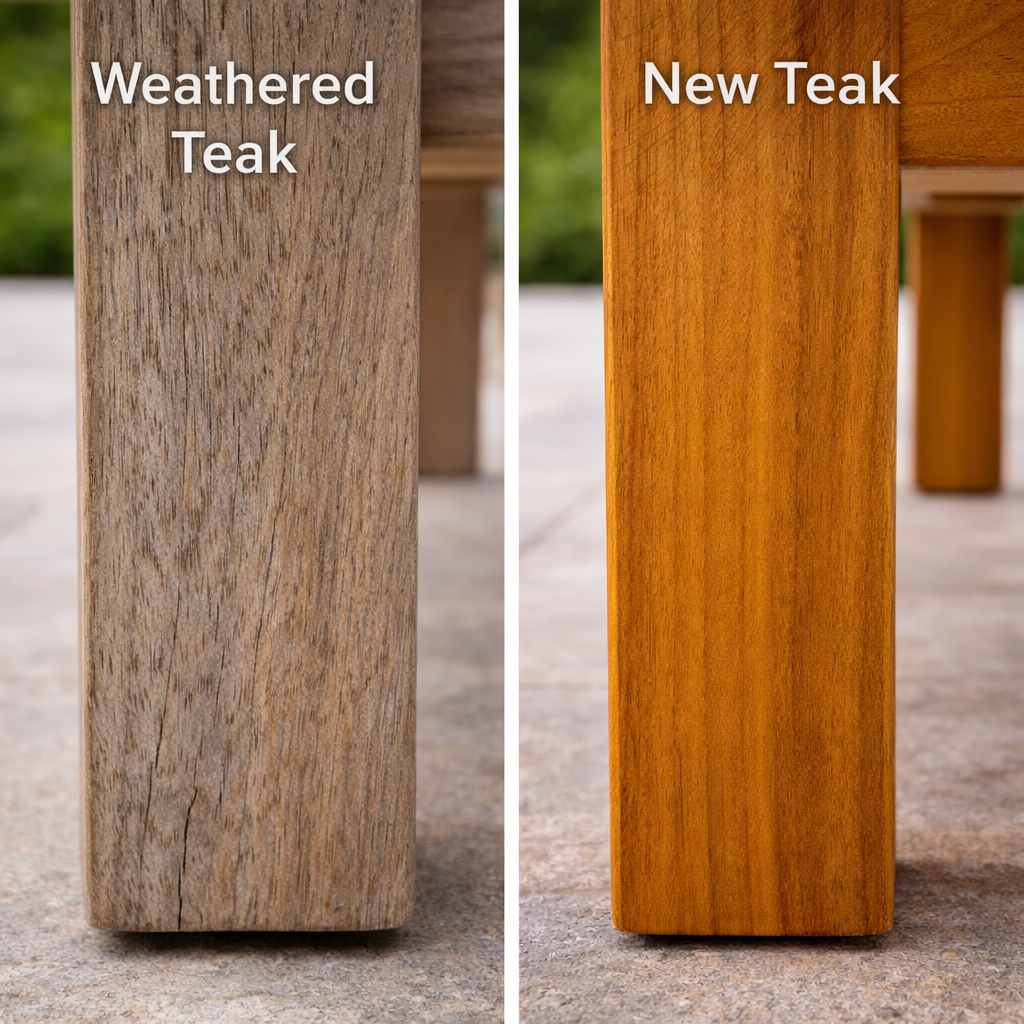
No Sealing → Silver-Gray Patina: Within 18 months, the teak transitioned to a uniform, sophisticated silver-gray. While the color changed, the surface remained smooth.
Zero Rot or Warping: Unlike the Cedar, which showed soft spots at the ground-contact points, the teak legs remained as rock-hard as the day they were delivered.
Minimal Cracking: While “checking” (small surface cracks) is normal for any outdoor wood, the teak’s checks were less than 1mm deep and never compromised structural integrity.
Still Structurally Solid: After 60 months of snow, salt spray, and UV rays, the joinery remained perfectly tight.
The Verdict: If you are okay with the “weathered look,” teak requires zero chemical intervention to remain a functional heirloom.
⚖️ The 2026 Legal Landscape: EUDR and the Lacey Act
In April 2026, the regulatory environment for teak wood changed significantly. The European Union Deforestation Regulation (EUDR) and the US Lacey Act now require “plot-level geolocation” for every imported teak board.
Supply Scarcity: This has effectively halted imports of wild-grown Burmese Teak, driving the price of “old-growth” teak wood to historic highs ($50+ per board foot).
The Certification Trap: Many sellers claim “FSC Certified,” but in 2026, you must verify the Individual Transaction Certificate. If a seller cannot provide geocoordinates, the wood may be seized by customs.
🪑 Teak Wood Furniture: What to Buy (And What to Avoid)
Summary: Not all teak furniture is equal—most failures come from poor grading, not the wood itself.
What to look for:
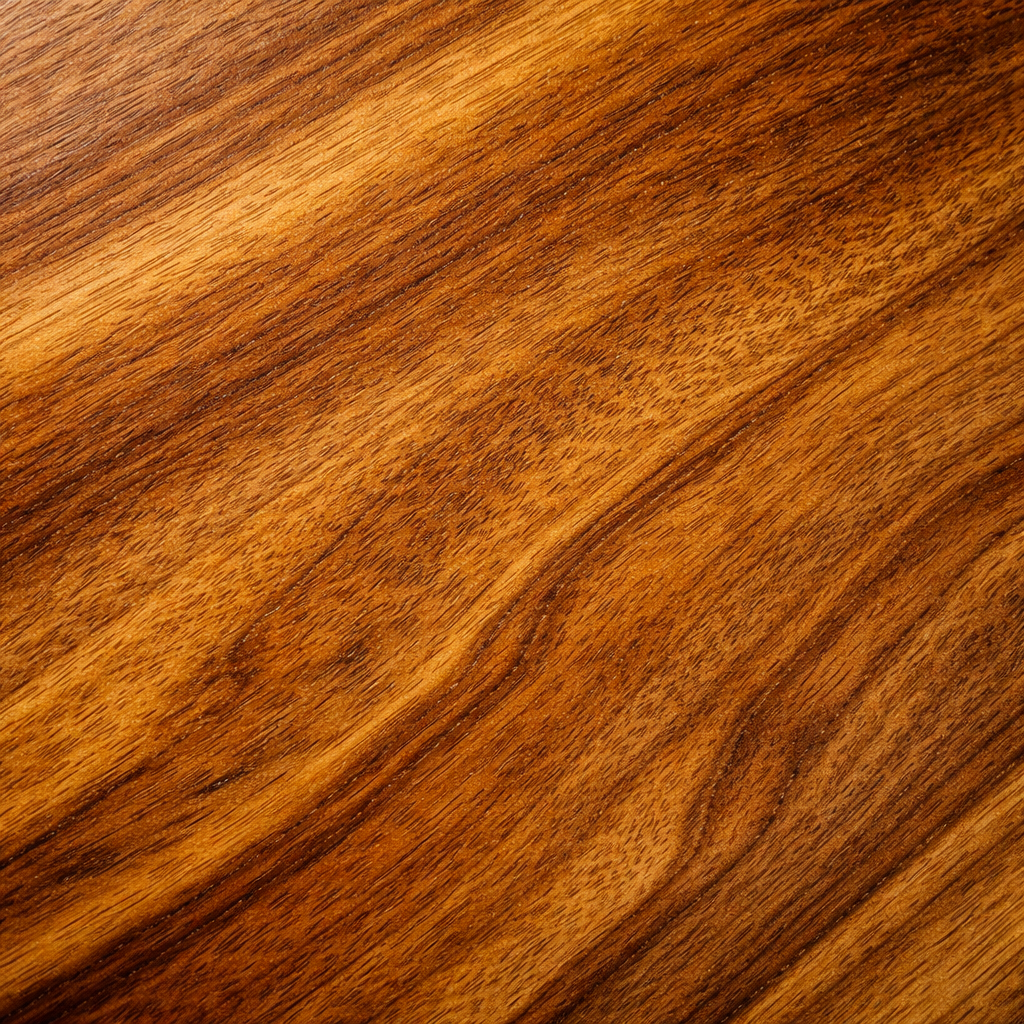
Grade A heartwood only: Look for a dark, rich, honey-gold color. It should feel dense and heavy.
Tight grain: High-quality teak has straight, uniform grain patterns with minimal knots.
Solid construction: Ensure the piece is 100% teak. Many manufacturers use Plywood Substrates hidden under thin teak veneers.
What to avoid:
“Teak finish” or “teak oil” labels: This is a major warning. These terms usually mean the wood is a cheaper species (such as Eucalyptus) that is stained to look like teak.
Lightweight pieces: Real teak is heavy. If you can pick up a large chair with one finger, it has low oil and silica content.
Mixed-grade builds: Common on “cheap” patio sets where the visible tops are Grade A, but the structural legs are Grade C sapwood.
🔬 Forensic Wood Science: Tectoquinones and Tyloses
Summary: Why teak outperforms every other species at a molecular level.
The benefits of teak wood aren’t just surface-level. Inside the heartwood, teak produces a unique naphthoquinone called Tectoquinone. This chemical is a natural biocide that is toxic to termites and fungi.
Furthermore, teak is one of the few hardwoods with high concentrations of tyloses—outgrowths of parenchyma cells that essentially “plug” the wood’s vascular system. This creates a natural waterproof barrier that prevents moisture from traveling deep into the board, maintaining dimensional stability even when submerged in saltwater.
Teak is more durable and longer-lasting than acacia, especially outdoors, but it is significantly more expensive. Acacia is a good budget alternative to teak for outdoor furniture, but it requires more frequent maintenance to prevent UV damage and cracking.
🌧️ Is Teak Wood Waterproof? (The Truth)
Is teak wood waterproof?
Teak wood is highly water-resistant due to its natural oils, but it is not completely waterproof. It performs exceptionally well outdoors and resists rot and decay better than most woods, making it ideal for wet environments.
⏳ The “Cost of Regret” & Maintenance Guide
Does teak wood require maintenance?
Teak wood requires very little maintenance for durability because of its natural oils, but regular cleaning or sealing is needed to maintain its golden color rather than letting it weather to gray.
The Maintenance Protocol:
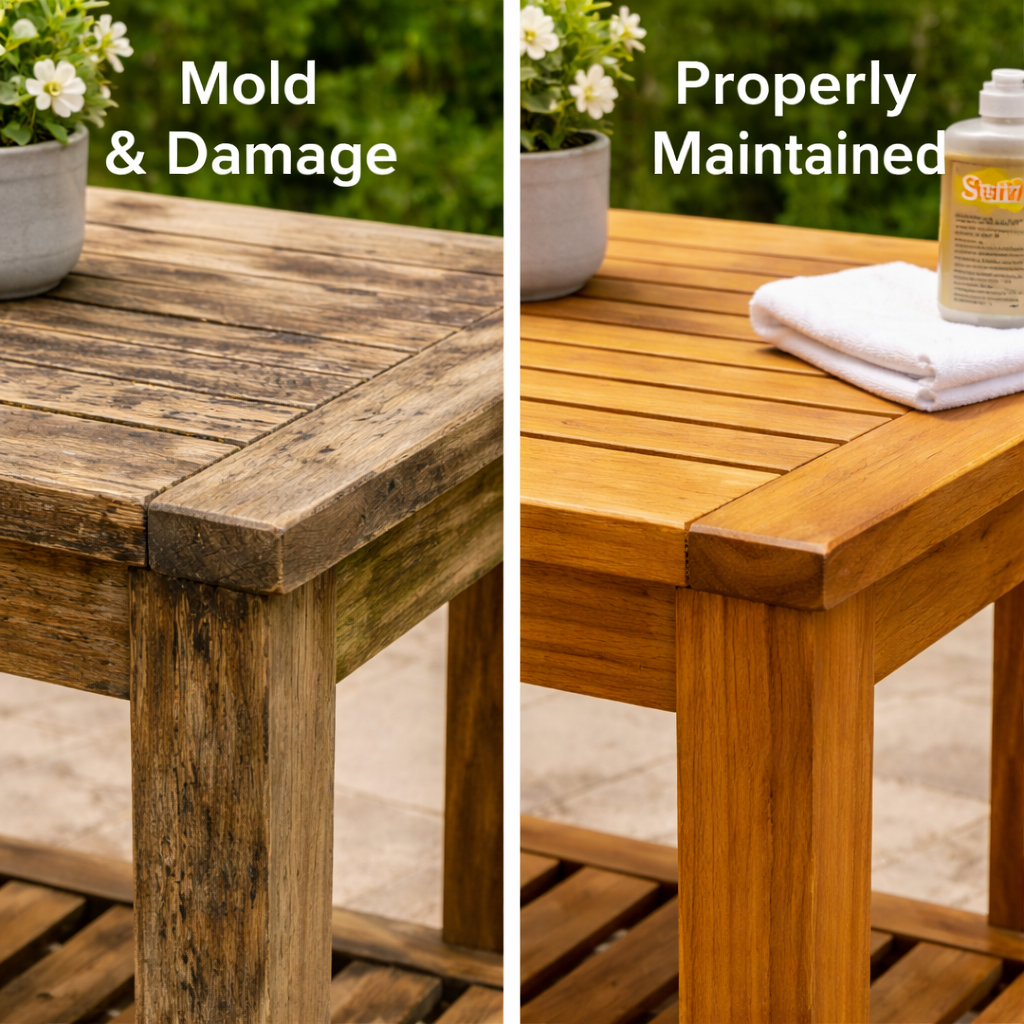
Stop using “Teak Oil”: This is a huge warning. Most “teak oils” are actually blends of linseed or tung oil. They create a “sugar-rich” surface that feeds mold, eventually turning your teak wood furniture black.
The Pressure Wash Mistake: Never use a high-pressure washer. It rips the “soft” springwood fibers out, leaving the wood with a rough, “furry” texture.
Use a Sealer: To maintain the golden look, apply a Wood Sealer annually.
🏠 Architectural Teak: The 2026 Design Trend
Modern architecture has moved beyond furniture. We are now seeing a surge in Teak Cladding for ultra-luxury coastal homes.
Vertical Battening: Using 1×2 Grade A teak battens provides a contemporary aesthetic while hiding fasteners and allowing the wood to move naturally without warping.
🛠 Step-by-Step: How to Restore Weathered Teak
If you’ve inherited a grey, moss-covered bench, follow this pro path:
Deep Clean: Use a two-part Wood Cleaner and Brightener kit.
Mechanical Sanding: Use 120-grit sandpaper, always sanding in the direction of the grain.
Vacuum & Acetone Wipe: Remove all dust and surface oils.
Real teak is dense, oily, and heavy with a tight grain. If the wood feels lightweight or shows visible knots and a pale, yellowish color throughout, it is likely lower-grade sapwood or another species, such as Eucalyptus.
Why does teak turn gray?
Teak turns gray due to UV exposure, breaking down surface oils and cellulose. This is a purely cosmetic change and does not affect the wood’s structural integrity or durability.
Why is teak wood so expensive?
The price of teak wood is driven by a 50-year growth cycle and its extreme durability. It is a one-time purchase that lasts a lifetime.
Does teak wood need sealing?
No, it does not need it for strength. If you enjoy the weathered silver look, you can leave it completely untreated for 50 years.
What are the main teak wood benefits?
The primary benefits of teak wood include natural pest resistance, extreme water repellency, fire-retardant properties, and a high strength-to-weight ratio.
For teak outdoor furniture, yes. Mahogany is a beautiful wood, but it checks (cracks) and warps more easily than teak when exposed to the elements.
⚓ Conclusion: The 2026 Verdict
Investing in teak wood furniture is an exercise in long-term thinking. While the initial teak wood price may cause sticker shock, the lack of replacement costs over 30 years makes it the most economical choice for luxury exteriors. Avoid the mistake of buying Grade C, use the right marine-grade hardware, and enjoy the “King of Woods.”
What Is Sande Plywood? Uses, Pros, Cons, and Buying Guide by Admin March 28, 2026 Hardwood Sande plywood fills a very specific role: it gives you a smooth, paint-ready surface with solid strength—without paying hardwood prices. Once you understand where it…
OSB Board: Pros, Cons and Best Uses by Admin August 25, 2026 DIY OSB is everywhere in modern construction and barely gets a second thought — until something goes wrong with it. It sheathes the walls and roofs…