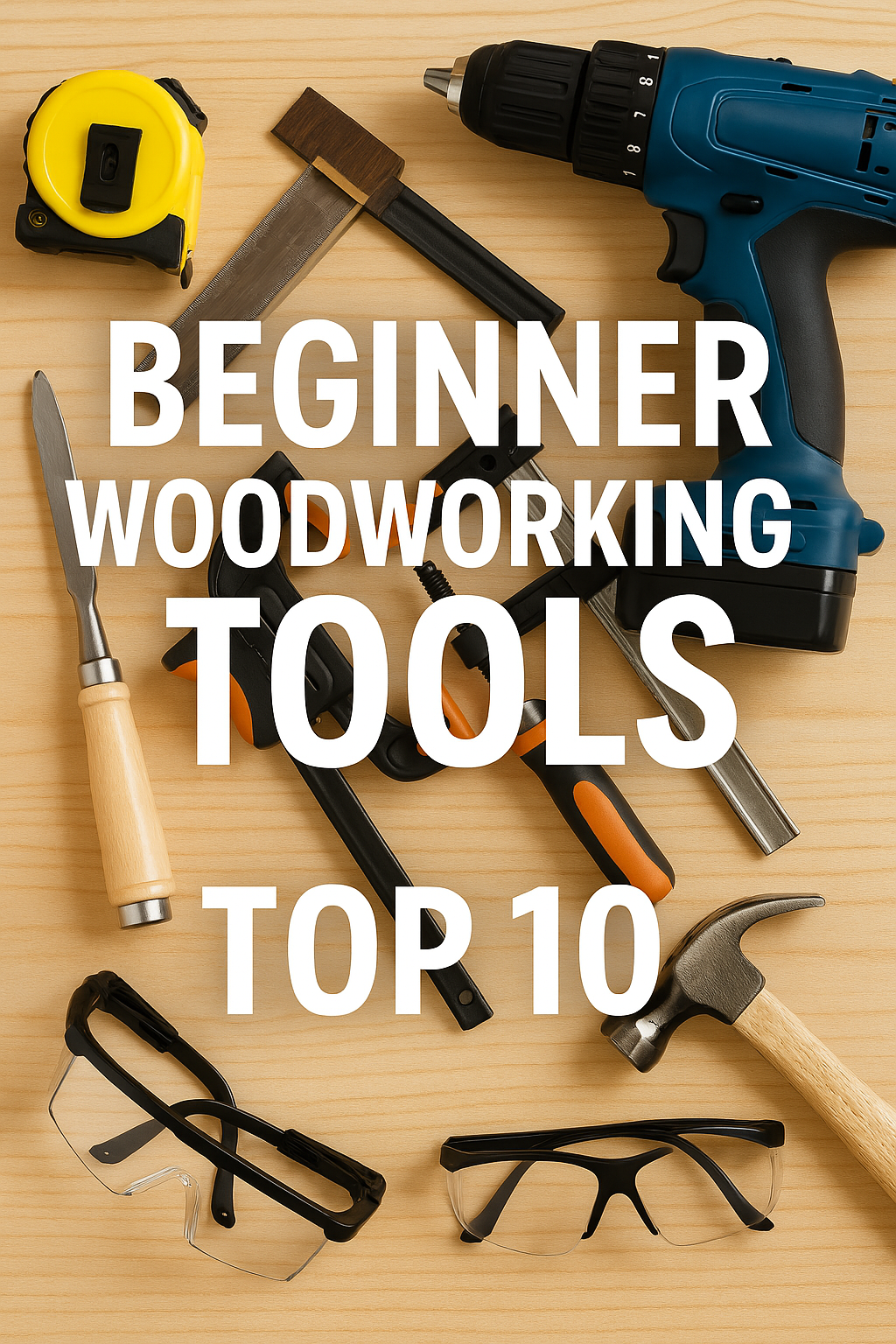
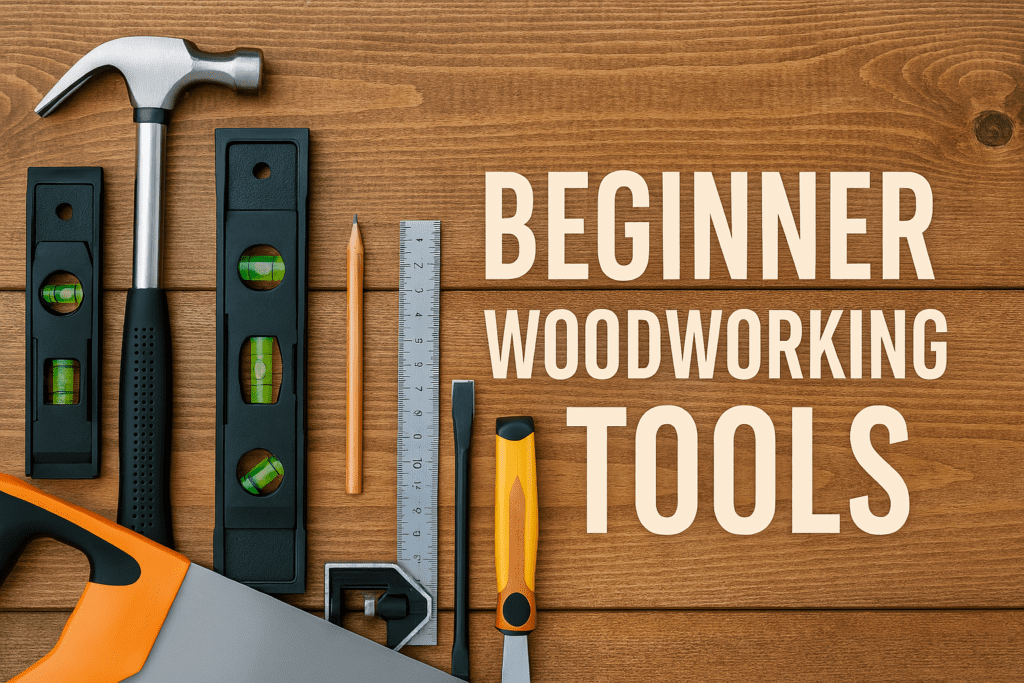
I remember my first DIY project like it was yesterday — a wobbly shoe rack made from warped 2x4s and way too many screws. I was working out of a cramped rental garage with a folding table, a hand-me-down drill, and more enthusiasm than sense. I didn’t have a clue what I needed, so I bought stuff I didn’t use and skipped tools I really should’ve had. So here’s the list I wish someone gave me when I got started — 10 beginner woodworking tools I’ve actually used, abused, and would buy again. Whether you’re building shelves or fixing up your space, having the right beginner woodworking tools makes all the difference.
🛠️ Quick Starter Kit Checklist: Print this, tape it to your shop wall, and cross tools off as you go:
Tape Measure Skip the cheapos from the checkout bin. Get something that won’t buckle like a noodle when you pull it past 5 feet. I like the Stanley FatMax — it’s solid and can survive a fall (or five). You’ll use it more than any other tool.
Combination Square I built an entire cabinet once — then realized every joint was slightly off. A good square would’ve saved me hours of swearing. Use it to mark straight lines, verify 90° angles, and keep your projects from turning into rhombuses.
Cordless Drill An absolute workhorse. I’ve drilled holes, driven screws, mixed stain, and even stirred paint with mine. Just make sure it’s comfortable and comes with two batteries. My DEWALT’s been dropped, frozen, and once caught in a light rain — still works.
Circular Saw Before I got a table saw, this thing did everything. Crosscuts, rips, angles — just clamp a board as a guide and go slow. It’s louder than you’d expect, but once you get the feel, it’s surprisingly versatile.
Clamps You’ll never have enough. I started with two. Now I have a pile. Glue-ups, holding jigs, acting as third hands — they’re always useful. Get a few quick-grips and bar clamps to start.
Chisels They seem old-school, but they’re crazy useful. Trim tenons, clean up corners, pop off stubborn glue — I use mine more than I thought I would. Sharpen them occasionally and they’ll treat you right.
Random Orbital Sander I used to sand by hand. Then I got one of these. Game-changer. Smooths rough plywood, preps stained projects, even helps knock down uneven joints. Mine lives plugged in and ready.
Hammer Sure, you’ve got one already — but is it decent? A 16 oz. claw hammer with a comfy grip goes a long way. You’ll tap joints, drive finish nails, and occasionally convince misaligned boards to behave.
Safety Gear I didn’t wear safety glasses until I caught a splinter right between the eyes. Never again. Get glasses, a respirator (especially for sanding), and ear protection. Not optional. Not cool to skip.
Workbench or Sturdy Table You don’t need a fancy bench. I started with an old hollow-core door on sawhorses. It worked. Just make sure your surface doesn’t rock while you work. Flat and stable is all you need.
How I Got Started: My first project was crooked, wobbly, and completely overengineered. But I was proud of it. I built it in a garage with no insulation, standing on cardboard to stay off the cold floor. That build taught me more than any YouTube video. If you’re new — just start. Use what you’ve got. Upgrade as you go.
Final Thoughts: Woodworking doesn’t start with a fancy workshop. It starts with a saw, a drill, a wobbly table, and a willingness to try. So pick up a tool, mess something up, and build something anyway.
Plywood H-Clips: What They Are & Why You Need Them by Admin March 13, 2025 Installing Softwood plywood is commonly used for walls, roofs, and floors in home construction. In all these areas, the plywood must bridge gaps between support beams.…