There are a handful of woods in woodworking that instantly make you pause for a second, and walnut wood is one of them. The first time I sanded a rough piece of walnut, I remember stopping halfway through because the color beneath the dust looked like it belonged in a custom-furniture showroom. Walnut seems to have this ability to feel special, even if you’re making something simple like a shelf or a cutting board.
This guide is not a quick overview — it’s a complete, experience-based look at walnut wood in 2025: how it behaves, how it ages, what it costs, the best projects for it, and how to bring out that beautiful grain that people pay so much money for. If you’ve ever wondered whether walnut is worth the price, or if you’re trying to avoid buying fake walnut from big-box stores, this is everything you need to know.
🌿 What Walnut Wood Is and Why It’s Unique
Walnut wood usually refers to Black Walnut (Juglans nigra), the dark hardwood native to North America. There’s also English walnut, but Black Walnut is the furniture-grade species that woodworkers love.
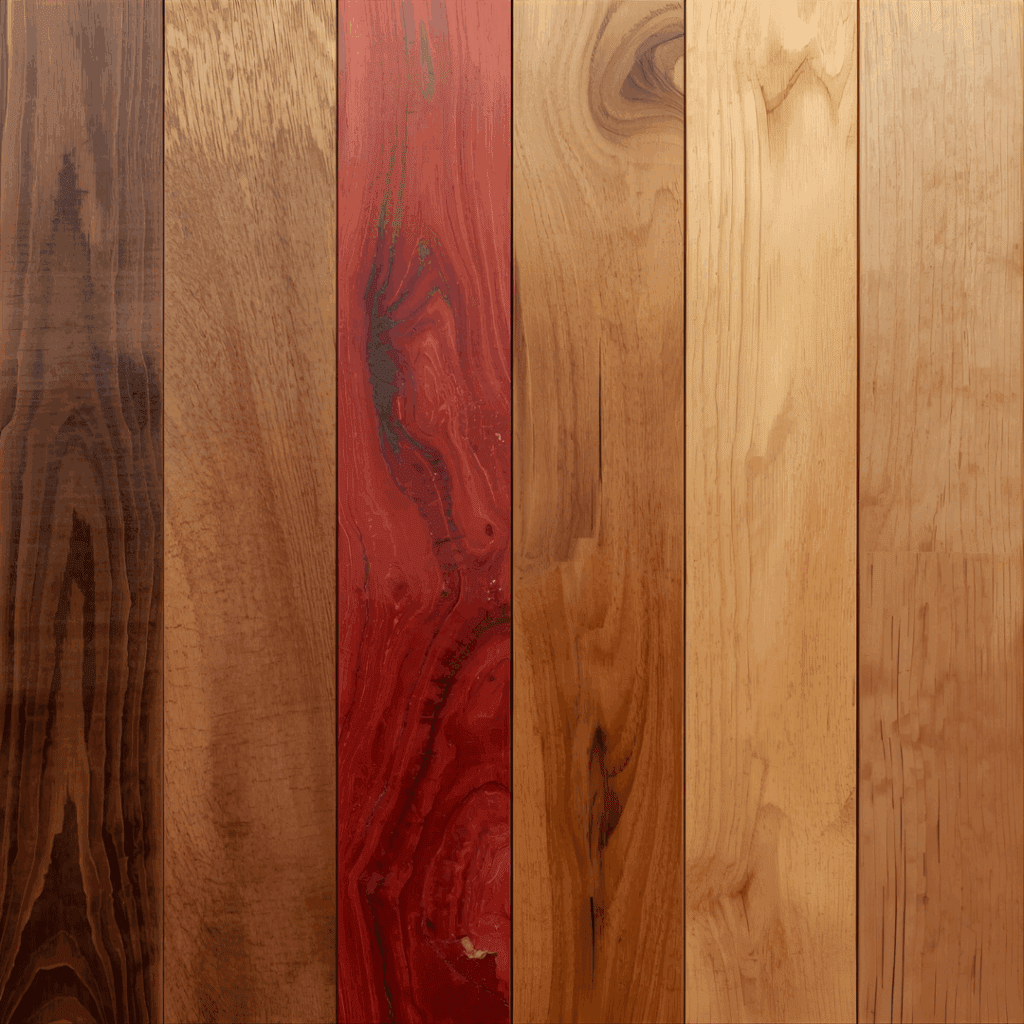
What makes walnut unique is the color and grain that show up naturally — no stain required. The heartwood has deep brown tones, sometimes with purples or smoky grays, while the sapwood ranges from pale cream to light tan. Designers now use the contrast intentionally in tabletops, headboards, floating shelves, and even kitchen cabinetry.
Walnut also has an open grain, but not nearly as deep or dramatic as oak. That middle-ground texture gives walnut a luxurious feel, especially when finished with oil.
Its stability is another reason it’s popular. Unlike many hardwoods that warp or twist easily, walnut tends to behave. Even when humidity shifts, walnut tends to move predictably, making it ideal for furniture and cabinetry.
People often compare walnut to maple, oak, and cherry — the “big three” of typical hardwoods. But walnut has its own personality, both in its strength and in its appearance.
Walnut Hardwood vs Maple
Maple is harder on paper, but sometimes that’s not a blessing. It burns easily on a table saw and sometimes tears out when you hit a knot or odd grain direction. Walnut cuts cleaner, sands easier, and takes hand planes beautifully. If you want a piece of wood that doesn’t fight you, walnut wins.
Maple looks modern and bright. Walnut looks warm, luxurious, and timeless.
Walnut Hardwood vs Cherry
Cherry has a gorgeous red-brown tone, but it changes dramatically over time. Cherry darkens as it ages, especially in sunlight. Walnut actually lightens slightly, which means a walnut table will look softer and somewhat more golden 10 years from now.
The two woods pair surprisingly well, especially in mixed-species furniture. A cherry drawer front with walnut sides looks stunning.
Black Walnut Wood vs Oak
Oak is durable and affordable, but the grain is bold and rustic. Walnut’s grain is smoother, more understated, almost silky. That’s why interior designers gravitate toward walnut for minimalist and modern looks.
Oak is ideal for farmhouse styles; walnut is suitable for clean modern aesthetics.
Slabs especially vary wildly in price. A live-edge walnut slab table top can easily cost $800+ for a single board.
💪 Walnut Wood Durability & Strength
People often ask if walnut is “strong enough” for tables or if it will dent easily. Walnut is absolutely strong enough for long-term use.
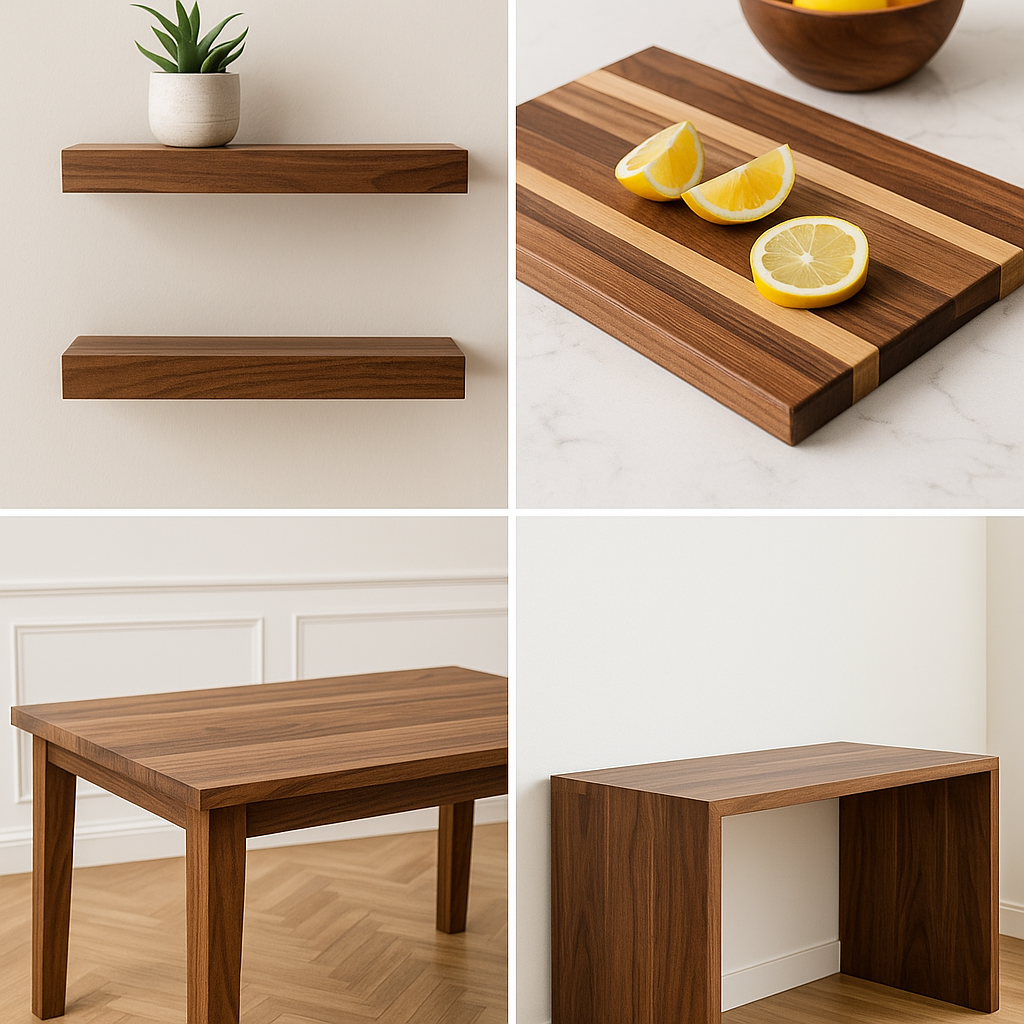
Its Janka hardness of around 1,010 means it resists dents better than pine and poplar, but isn’t so hard that you can’t work with it. These qualities make walnut an excellent choice for:
Dining tables
Nightstands
Dressers
Floating shelves
Desk tops
Mantels
Headboards
Chairs
One thing I love about walnut is how quietly it ages. Instead of turning orange or overly dark, the walnut fades into a warm brown. It softens naturally without losing its richness.
🧰 Tools That Work Best on Walnut Wood
I’ve tried just about every tool possible on walnut wood—cheap blades, expensive blades, hand planes that barely worked, and a sander that rattled like it wanted to escape the shop. After enough trial and error, a few tools consistently make walnut easier and far more enjoyable to work with.
Best Tools for Cutting Walnut Wood
There’s nothing special or fancy here—use a good carbide-tipped blade. The first time I switched from a budget blade to a sharper carbide one, the difference was noticeable. The cut didn’t scream, the saw didn’t fight me, and the edge came out clean enough that I barely had to sand it. Walnut isn’t a grabby or dramatic wood, but it definitely rewards sharp tools.
Best Tools for Shaping Walnut Wood
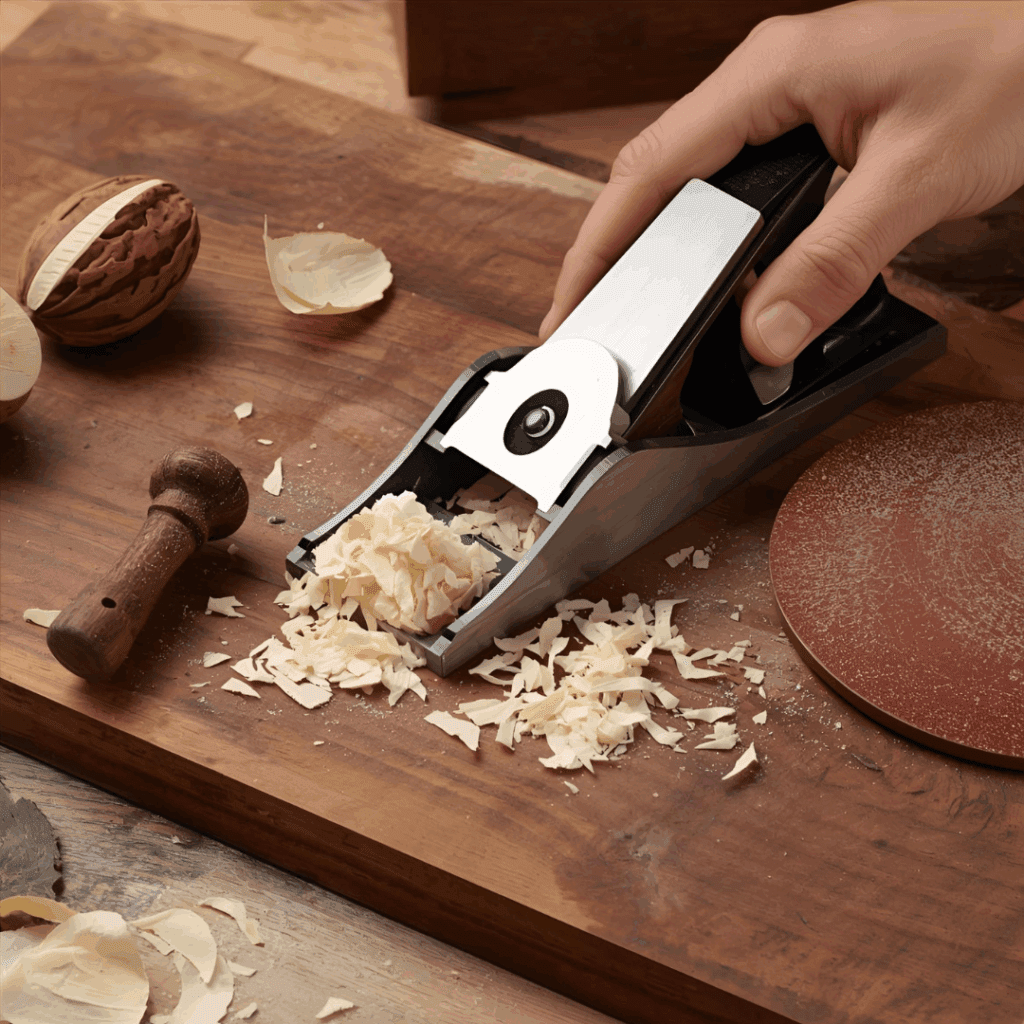
If you own a hand plane, walnut is the wood that will make you fall in love with it. When the grain cooperates, a tuned plane slides across the surface, producing thin shavings that curl up like chocolate ribbons. Maple doesn’t behave like that; it’s too hard and too stubborn. Walnut’s softness makes shaping it almost relaxing—more like guiding the tool than forcing it.
For smoothing walnut, I usually start with a random orbital sander, but the trick is the progression. Jumping straight from rough to fine grit never works well on walnut. I’ve had the most success moving slowly from 180 to 220 and then to 320 grit. That final pass with 320 feels almost like polishing the wood—your fingertips can actually feel the surface tightening up and becoming silky.
🎨 Walnut Wood Grain, Color & Natural Beauty
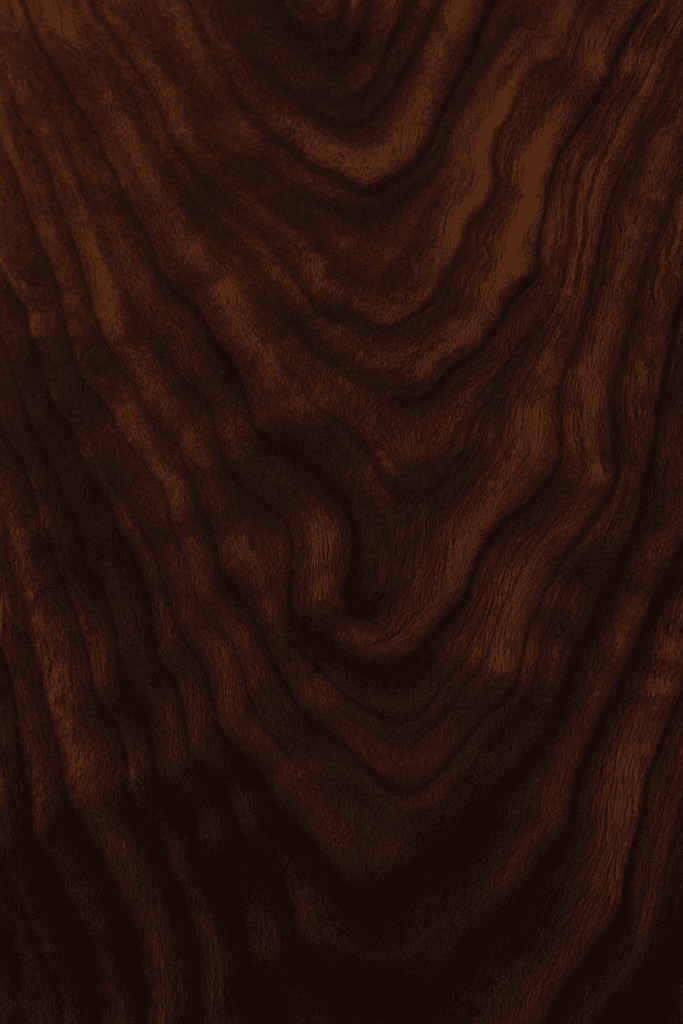
The grain in walnut wood is incredibly expressive. No stain can recreate the depth and variation naturally present in walnut.
Walnut Heartwood Colors
Espresso brown
Chocolate
Violet-brown streaks
Smoky, grayish undertones
Occasionally almost black
Walnut Sapwood Colors
Cream
Off-white
Pale tan
Many modern furniture makers lean into the contrast between sapwood and heartwood. In a live-edge slab, the sapwood can create a bold, natural accent line along the edges.
Walnut grain can be straight, curly, wavy, feathered, or lightly quilted. You won’t know until you plane it — and that’s part of the fun.
🧴 Best Walnut Wood Finishes
Walnut looks best when the finish feels natural and enhances the grain instead of smothering it.
Whenever I walk into my shop and see a few walnut boards leaning against the wall, I get that weird little spark of “I could make something cool today.” Walnut has that effect. It doesn’t matter if you’re brand new to woodworking or you’ve been at it for years—there’s always a project that fits your level without feeling boring.
For People Just Getting Started
When you’re new, the best projects are the ones that give you a quick win. Walnut almost cheats for you, since its color and grain do half the work. I remember giving a friend a handful of offcuts, and he turned them into coasters that looked nicer than the ones I bought from a boutique store. A simple photo frame is another great beginner project; walnut instantly makes it feel more expensive. If you have a small scrap, try a candle block with a single drilled hole—it takes fifteen minutes and somehow always looks intentional. And if you want something practical, walnut cutting boards are easy to make and make perfect gifts. Even a short shelf plank with two brackets can look like high-end décor.
For Woodworkers Who Are Comfortable With Their Tools
Once you’re past the “learning the saw” stage, you can start having more fun. A coffee table made from walnut feels like a statement piece, even with a simple design. I built a bench for my entryway and didn’t bother staining it; the wood itself was the decoration. Bedside tables, mantels, and knife blocks are also great middle-level projects. Walnut is soft enough that you can shape edges by hand without feeling like you’re sanding concrete, and the dark grain hides tiny mistakes better than lighter woods.
For Builders Who Want a Challenge
On the advanced side, walnut becomes the kind of material that makes you slow down and enjoy the process. One of my favorite builds was a large walnut dining table I made with a friend. When we wiped the first coat of oil on it, the grain came alive like marbled chocolate. Waterfall-edge desks are another amazing walnut project—the kind where you line up the grain and let it spill gracefully over the miter like a continuous ribbon. If you enjoy mixing materials, walnut and clear epoxy make river tables that people will swear you bought for thousands of dollars. For fine woodworkers, walnut cabinetry has a warm, modern feel, and if you’re into music, it makes beautiful guitar bodies and other instruments with a mellow, rich tone.
Because walnut is pricey, furniture stores often sell “walnut look” items made from poplar or MDF with a printed laminate.
How to Spot Real Walnut Wood
Grain does not repeat
End grain is naturally dark
Sapwood blends naturally
Wood weight feels medium-heavy
Slight earthy smell when cut
Signs It’s Fake
Identical repeating grain
Super lightweight
Perfect uniform color
MDF visible under chipped veneer
💵 Walnut Wood Prices
Average U.S. pricing:
Walnut plywood is also more expensive than most people expect. A full sheet generally lives in the $95 to $210 range, depending on thickness and the quality of the veneer. It’s still cheaper than buying solid slabs, but nowhere near the price of birch or maple plywood.
If you only need the look of walnut without the full cost, walnut veneer is the budget-friendly option. Most sheets run between $1.50 and $3 per square foot, and with careful application, the results can look surprisingly upscale.
Whenever I work with walnut wood, I’m reminded why people pay extra for it. It cuts cleanly, sands beautifully, and somehow makes even simple projects look intentional. There’s a calm richness in the grain that cheaper woods don’t have.
I’ve built everything from small shelves to large dining tables in walnut, and the wood always seems to bring out the best in the design. If you want a material that feels solid in the hands and ages gracefully, walnut wood is one of the safest, most rewarding choices you can make.
How to Make Plywood Look Nice: 6 DIY Finishes by Admin March 31, 2025 Finish Most people think of plywood as just cheap, utility-grade wood. For years, I thought the same—until I started working on weekend furniture builds in my…
Teak Wood: Properties, Uses & Care Guide by Admin September 28, 2025 DIY Woodworking Teak wood has earned its reputation the hard way—through centuries of use in places where failure wasn’t an option. Shipbuilders relied on it for decks…