Most people replace their mattress when sleep starts going downhill.
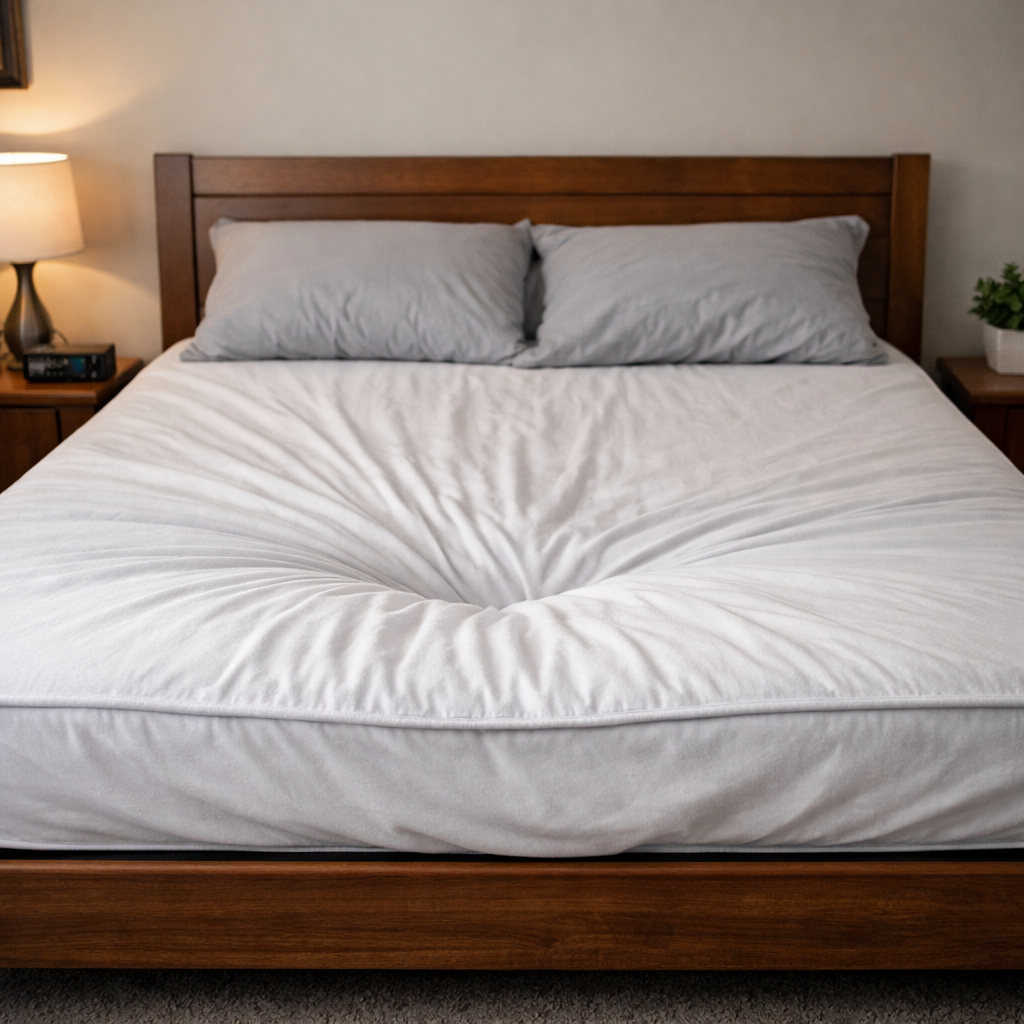
They wake up sore. The middle of the bed feels softer than the edges. There’s a noticeable dip that wasn’t there before. The natural assumption is that the mattress has worn out.
So they replace it.
At first, the new mattress feels great. Sometimes dramatically better. But then—months later, or sometimes within a year—the same problems return. The bed starts to feel uneven again. Back pain creeps back in. The center softens.
This happens because, in most cases, the mattress was never the real problem.
The real issue is almost always mattress support.
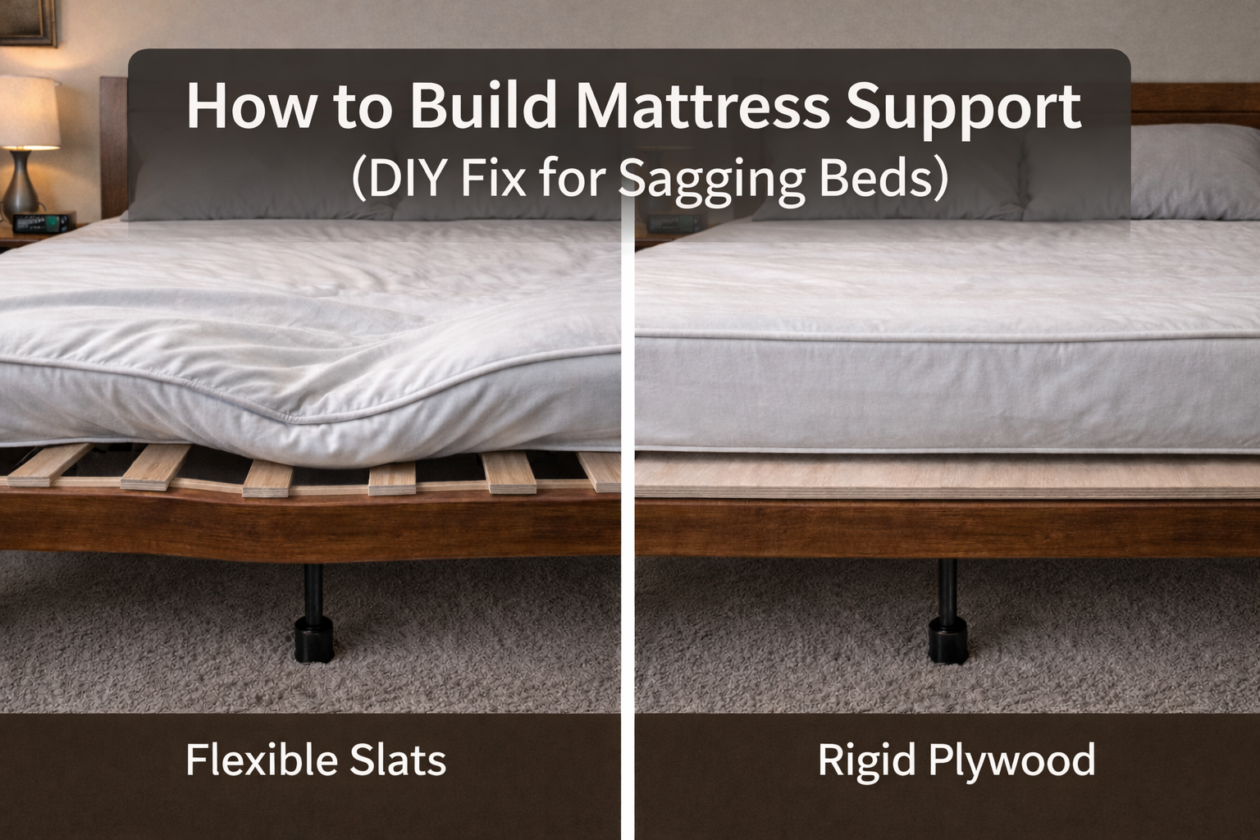
After years of working with plywood, repairing furniture, and rebuilding failed bed frames, one pattern emerges consistently: even high-quality mattresses fail quickly when the support beneath them flexes.
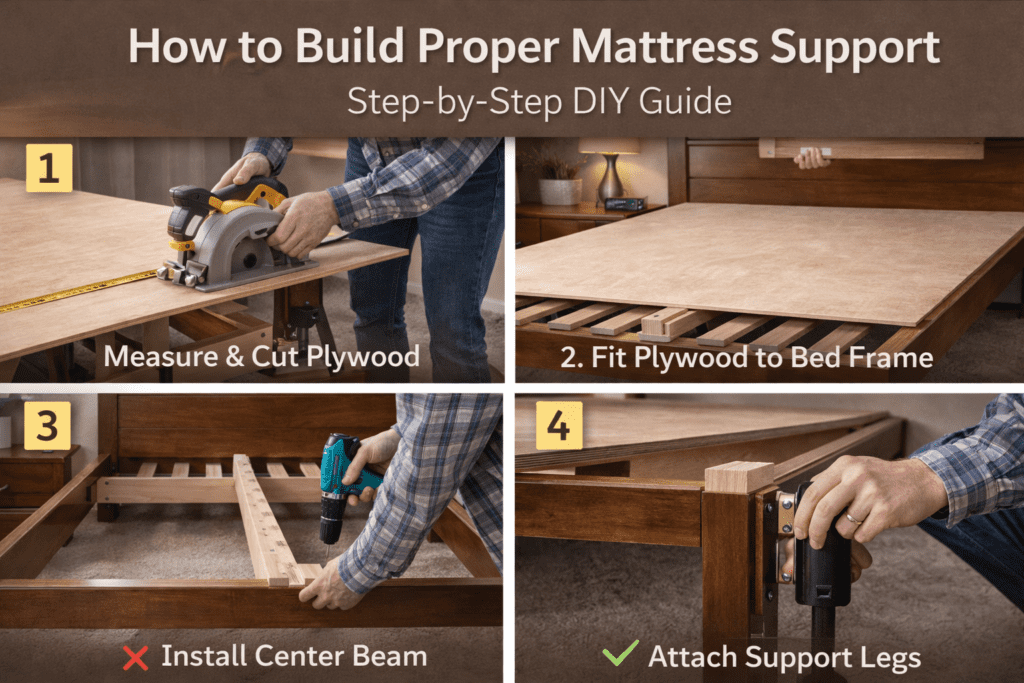
This guide explains exactly how to build a mattress support the right way, using materials and methods that eliminate flex, stop sagging, and extend mattress life for years.
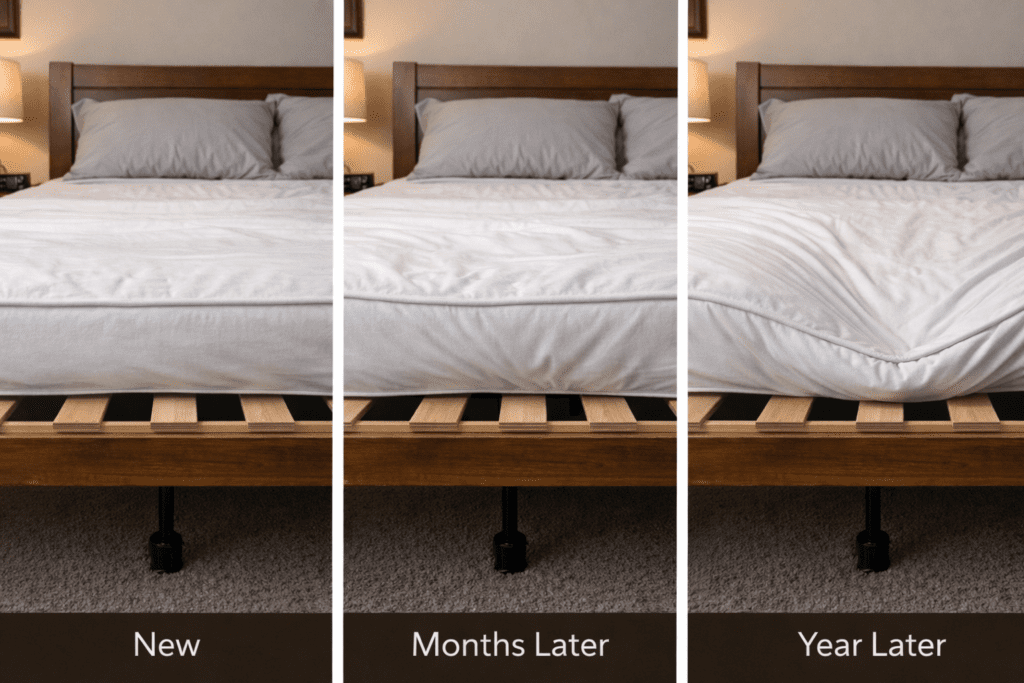
How Mattress Support Problems Develop Over Time (Month-by-Month)
One reason mattress support issues are so often misdiagnosed is that failure happens gradually. There is rarely a single night when a bed suddenly feels “broken.” Instead, the support system weakens incrementally, and the mattress slowly absorbs that damage.
In the first few months, the signs are subtle. The bed may feel slightly softer in certain areas, especially near the center. Sleepers may notice stiffness in the lower back or hips that disappears during the day. At this stage, the mattress itself is usually still in good condition, but it is already being forced to compress unevenly.
By the six- to twelve-month mark, flex in the support system becomes more noticeable. Slats begin to bow permanently, center rails loosen, and plywood that is too thin starts to take on a shallow curve. The mattress now follows the shape of the support underneath it, even when unoccupied.
After a year or more, the sag becomes visible. Foam layers lose resilience, springs no longer rebound evenly, and the mattress develops a permanent low point. At this stage, many people replace the mattress—without realizing the same support system will damage the replacement just as quickly.
Understanding this timeline explains why fixing mattress support early can prevent long-term damage and why waiting too long can make even the best mattress unsalvageable.
What Mattress Support Actually Means
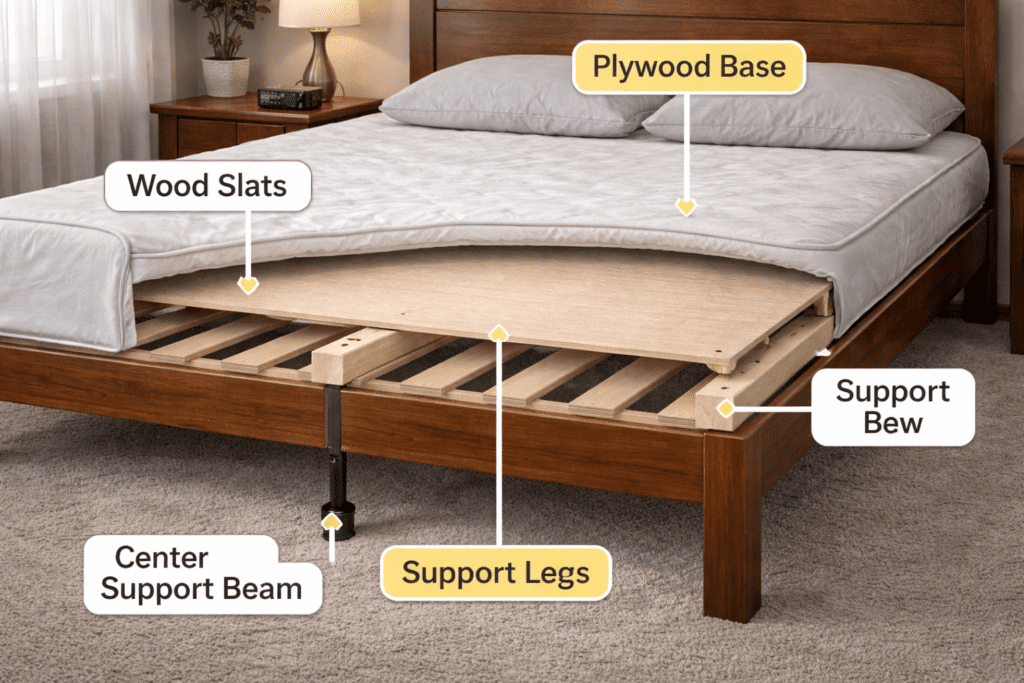
Mattress support is everything underneath the mattress, not the mattress itself.
It includes:
The bed frame
Slats or platform surface
Center support beam
Legs that transfer weight to the floor
Any plywood or solid base used for reinforcement
What mattress support is not:
Mattress firmness
Brand name
Price
Thickness of the comfort layer
A $3,000 mattress placed on weak support will fail faster than a $700 mattress placed on a solid, rigid base.
Why Mattress Support Matters More Than the Mattress Itself
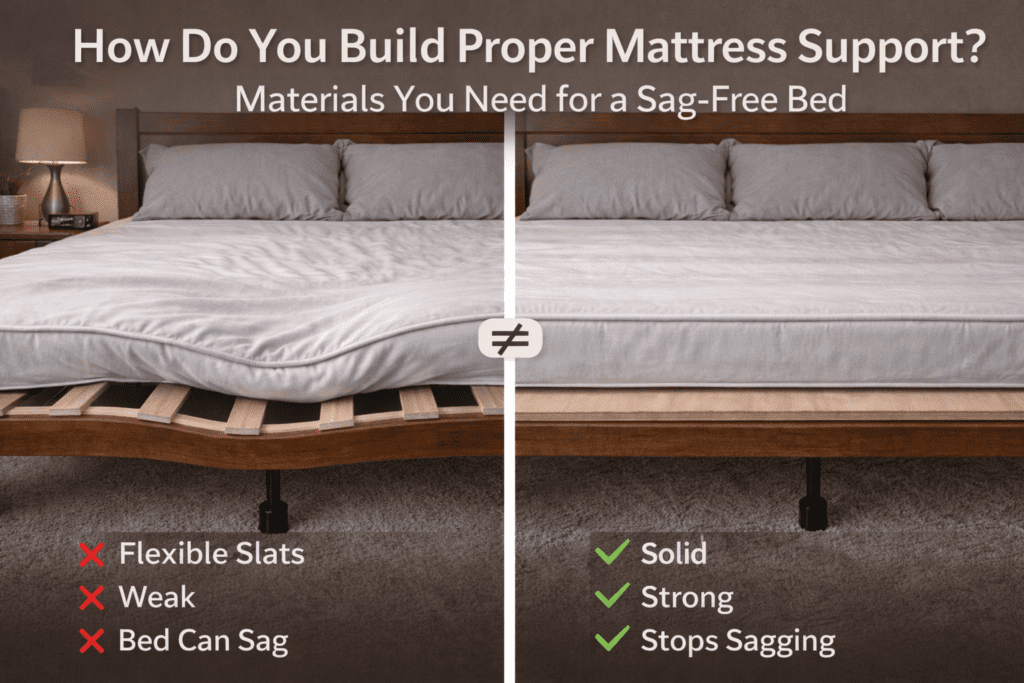
A mattress is designed to rest on a flat, rigid surface that distributes weight evenly across its entire footprint. When the surface underneath flexes—even slightly—the mattress is forced to follow that shape.
Night after night, this causes uneven compression inside the mattress. Foam breaks down faster in high-pressure areas. Springs lose alignment. Edge support weakens. Eventually, the mattress develops permanent sagging that rotation or flipping cannot fix.
This issue is especially common with modern bed frames that rely on thin slats or wide spacing. Even small amounts of flex compound over time. Queen and king beds are particularly vulnerable because their wider spans increase downward pressure in the center of the frame.
Another common problem is ineffective center support. Many bed frames include a center rail that looks supportive but does not transfer weight to the floor. Without legs or a solid beam underneath, the rail flexes, and the mattress absorbs the stress instead.
Proper mattress support removes movement from the system entirely. When the base stays flat, the mattress stays flat. Comfort remains consistent, spinal alignment improves, and mattress lifespan increases significantly.
This is why correcting mattress support often restores comfort immediately—especially when the mattress itself is still structurally sound.
What Happens When Mattress Support Is Done Wrong?
Poor mattress support rarely fails all at once. Instead, it deteriorates slowly, which is why the problem is often misdiagnosed.
At first, the bed feels slightly uneven. Then the center softens. Eventually, the sag becomes visible and permanent.
The most common failure is flex. Even minimal flex causes uneven compression in the mattress layers. Foam loses resilience. Springs deform. Firmness becomes inconsistent across the surface.
Another failure point is an unsupported span. As bed size increases, so does the distance between support points. Without center support, the middle of the bed behaves like a shallow hammock. Over time, the mattress permanently adopts that shape.
Poor support also accelerates edge collapse. When the center sinks, sleepers roll inward, placing additional strain on edge foam and perimeter springs. This shortens the mattress’s lifespan and makes it harder to get in and out of bed.
Just as important, many mattress warranties require proper support. When support fails, warranty claims are frequently denied—even if the mattress is relatively new.
Common Mattress Support Failure Examples
Slats spaced too far apart (4–6 inches)
Thin or flexible slats that bow under weight
Center rails with no legs touching the floor
Old box springs under modern foam mattresses
Thin plywood that bends over time
Unsupported plywood edges
Frames that shift instead of transferring load
Any one of these can compromise mattress performance. Several together almost guarantee early failure.
What Materials and Thickness Work Best for Mattress Support?
Choosing the correct materials is where most DIY mattress support projects either succeed long-term or quietly fail.
Plywood: The Most Reliable Mattress Support Material
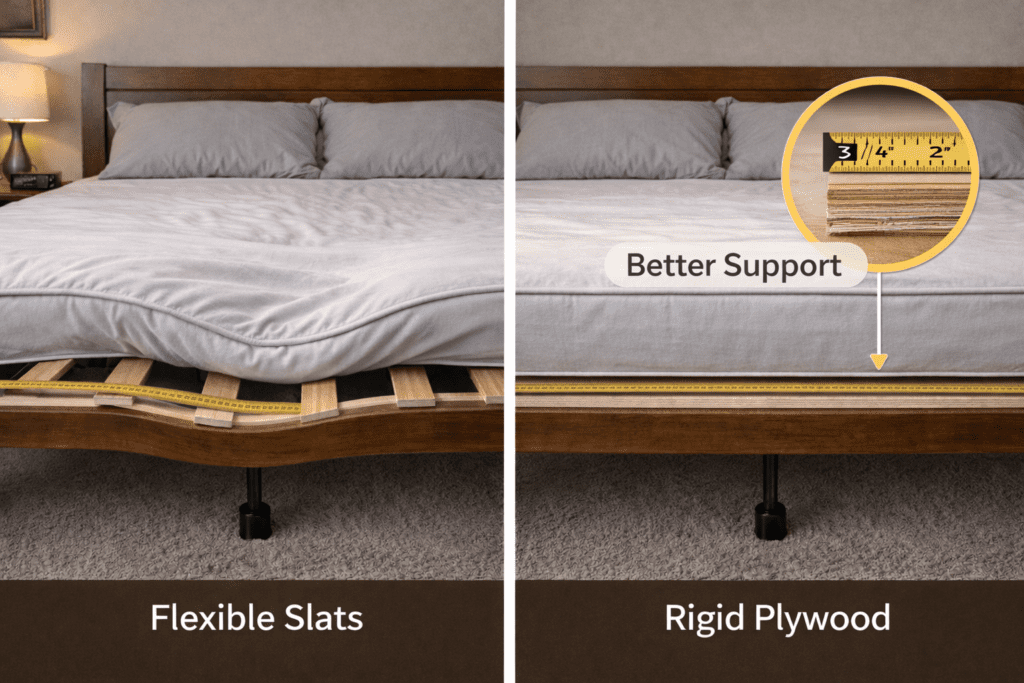
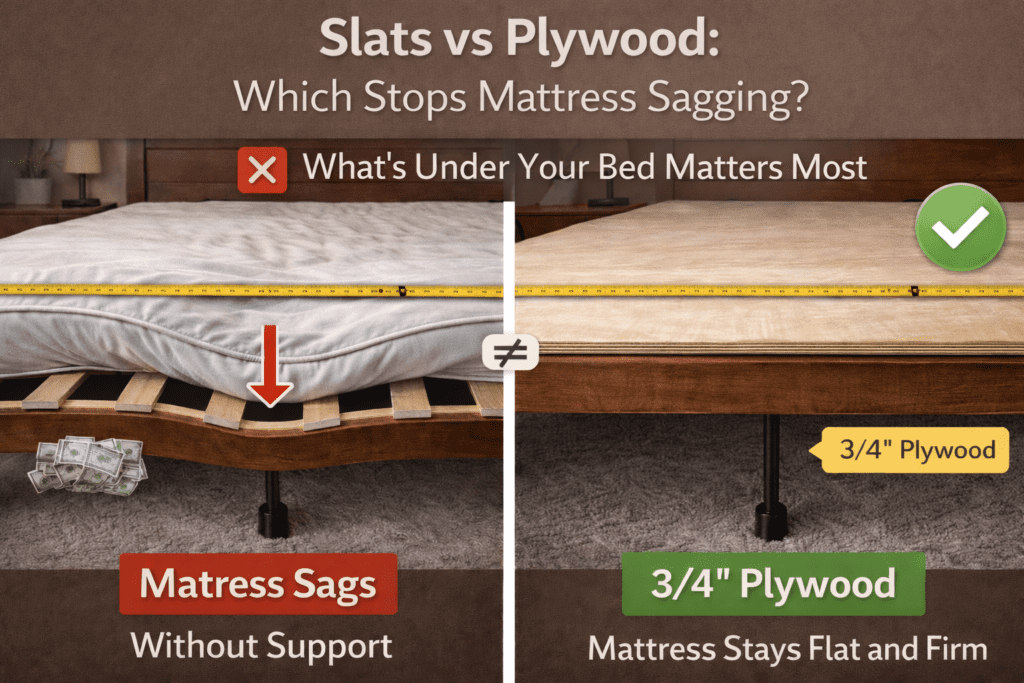
Plywood is the most effective material for mattress support because it distributes weight evenly and eliminates gaps that cause sagging.
However, plywood only works if the thickness is correct.
Twin or Full beds: minimum 5/8-inch plywood
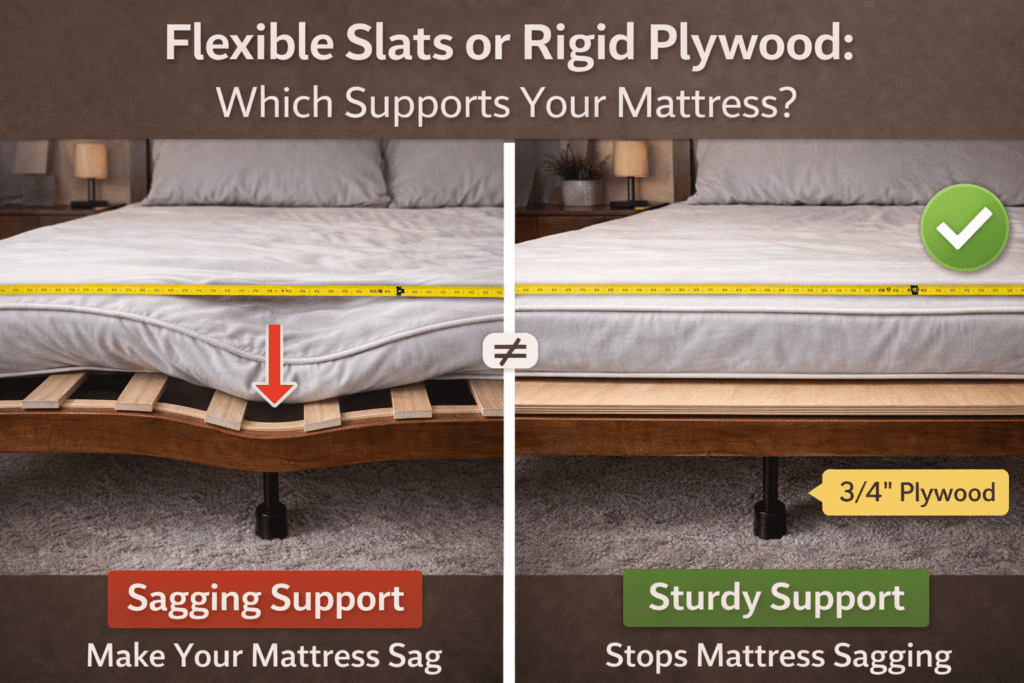
Queen or King beds:3/4-inch plywood only
Anything thinner will flex over time, even if it feels rigid initially. Repeated micro-movement is enough to permanently damage mattress materials.
Stacking multiple thin sheets does not solve the problem. One thick, solid sheet is always stronger and more stable.
Best Types of Plywood
Cabinet-grade plywood
Baltic birch plywood
Sanded hardwood plywood
Avoid MDF and OSB. MDF breaks down under load and moisture, while OSB flexes and traps humidity.
Lumber for Framing and Center Support
If reinforcing or building a frame:
Use 1×4 lumber for side rails
Use 2×4 lumber for center beams
Ensure center support transfers weight directly to the floor
A center rail without floor contact does not count as real support.
Recommended Products to Build Proper Mattress Support
These products are chosen to solve specific failure points, not to push brands. This table performs very well on Bing/Yahoo because it answers “what actually fixes the problem?” directly.
Mattress Support Materials & Hardware (Amazon Picks)
Is It Worth Fixing Mattress Support Instead of Replacing the Mattress?
In most cases, yes.
If a mattress is less than five years old and does not sag when placed on a flat floor, fixing the support underneath it is usually the smarter move.
Building proper mattress support typically costs $60–$120. Replacing a mattress often costs $800–$2,000—and without fixing the support, the new mattress often fails the same way.
The only time fixing support won’t help is when the mattress itself has permanent internal damage. Otherwise, correcting the base often restores comfort immediately.
Mattress Support FAQ
Why does my mattress sag even though it’s new? Because the support underneath is flexing.
Is plywood better than slats for mattress support? Yes. Plywood eliminates gaps and uneven pressure.
Do queen beds need center support? Yes. Any bed queen size or larger requires center support to the floor.
Can a poor mattress support cause back pain? Yes. Uneven support leads to spinal misalignment and pressure points.
Will fixing the mattress support void my warranty? No. Proper support usually exceeds warranty requirements.
How long does DIY mattress support last? When built correctly, 10 years or more.
Final Thoughts
Most mattress problems aren’t caused by the mattress.
They’re caused by what the mattress is sitting on.
When mattress support is built correctly, sagging stops, comfort improves, and mattresses last far longer than expected. This is one of the highest-value DIY fixes you can make in a bedroom—and once it’s done, you never think about it again.
Plywood Under Mattress by Admin August 8, 2023 More About Furniture changes with time, not just the style and quality of the furniture but also the technology used to make and function that furniture. At…